Group Trip Ground Rules Every Friend Group Needs
Every group that travels more than once needs a shared money rulebook. Here are the eight ground rules the best friend groups set before anyone books a thing.

Anna
Supasplit Team

The best friend groups aren't the ones without money conflict. They're the ones who set ground rules before the conflict has a chance to land. One 10-minute conversation before a trip replaces 10 texts of passive-aggression after.
Here are the eight rules the healthiest travel groups I've seen have in common. Copy them, modify them, put them in the group chat.
Rule 1: Budgets are stated out loud, not guessed
Before any trip, everyone says a real number. Not a range. Not a vibe. A single number for their all-in comfort level.
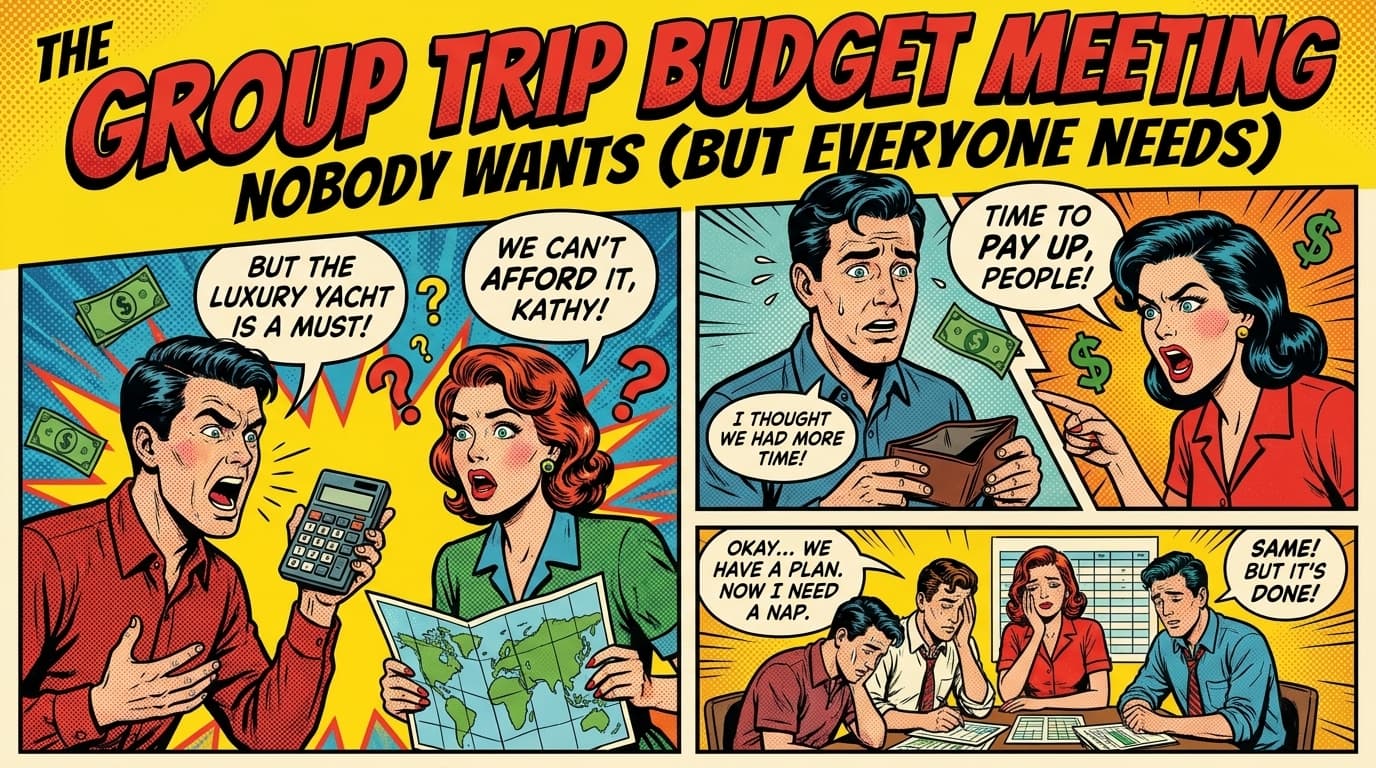
Write them all down. Plan to the lowest one, or plan tiers if the gap is wide. See the budget meeting guide for the script.
Why this is rule one: 80% of group trip money drama traces back to silent budget disagreement. Everyone thinks they're being reasonable and someone else is being unreasonable. The fix is saying numbers.
Rule 2: One app, one source of truth
Pick one bill-splitting app. Everyone downloads it. Every shared expense goes in there. No parallel spreadsheets, no 'I'll just Venmo you $60,' no 'remind me what we owed each other.'
This sounds small, but it's the difference between a smooth trip and a reconciliation nightmare. When the app is the single source of truth, arguments become math errors instead of trust issues.
Rule 3: Log expenses the same day they happen
Not at the end of the trip. Not 'when I remember.' The same day.
The reason: memory decays fast on trips. By day 6, nobody remembers what Tuesday's dinner was, who was there, or why there's a 90-euro charge floating around. Log at the table, 30 seconds, move on.
One person per day can be the 'logger' if that helps. Rotate or let whoever's naturally attentive take it.
Rule 4: Airbnbs split by room, not per head
Couples in a private bedroom pay more per person than a solo in a bunk. This isn't controversial math, it's obviously fairer. See the Airbnb split guide for the breakdown.
The reason this is a standing rule: if the group has this agreed from the first trip, nobody has to fight about it on trip #7 when a new couple joins. It's just how the group does things.
Rule 5: Opt-in activities are opt-in
Fancy dinners, excursions, spa days, bottle service. If it's not essential, it's opt-in. Anyone can pass without explanation.
'I'll pass this time' is a full answer. Nobody has to justify their budget or their tiredness or their preference.
This rule single-handedly makes mixed-budget group trips work. It also prevents the resentful yeses that come from pressure to 'be in the group photo.'
Rule 6: Nobody fronts more than $500 without being paid back in a week
Someone always ends up fronting a big Airbnb deposit or activity booking. That's fine, but it shouldn't become a long-term loan. Set a standing rule: amounts over $500 get reimbursed within 7 days of the trip ending, or ideally upfront.
The reason: the person fronting the money is quietly subsidizing the rest of the group for however long it takes. 'I'll get you next time' is how resentment accumulates. Pay people back fast.
For smaller amounts (a 40-euro dinner), end-of-trip settlement is fine. Just do it within a week of getting home.
Rule 7: Dinners get logged with 'equal' or 'itemized,' decided at the table
When the bill comes, one person asks: 'Equal split or itemized?'
- Orders were similar: equal.
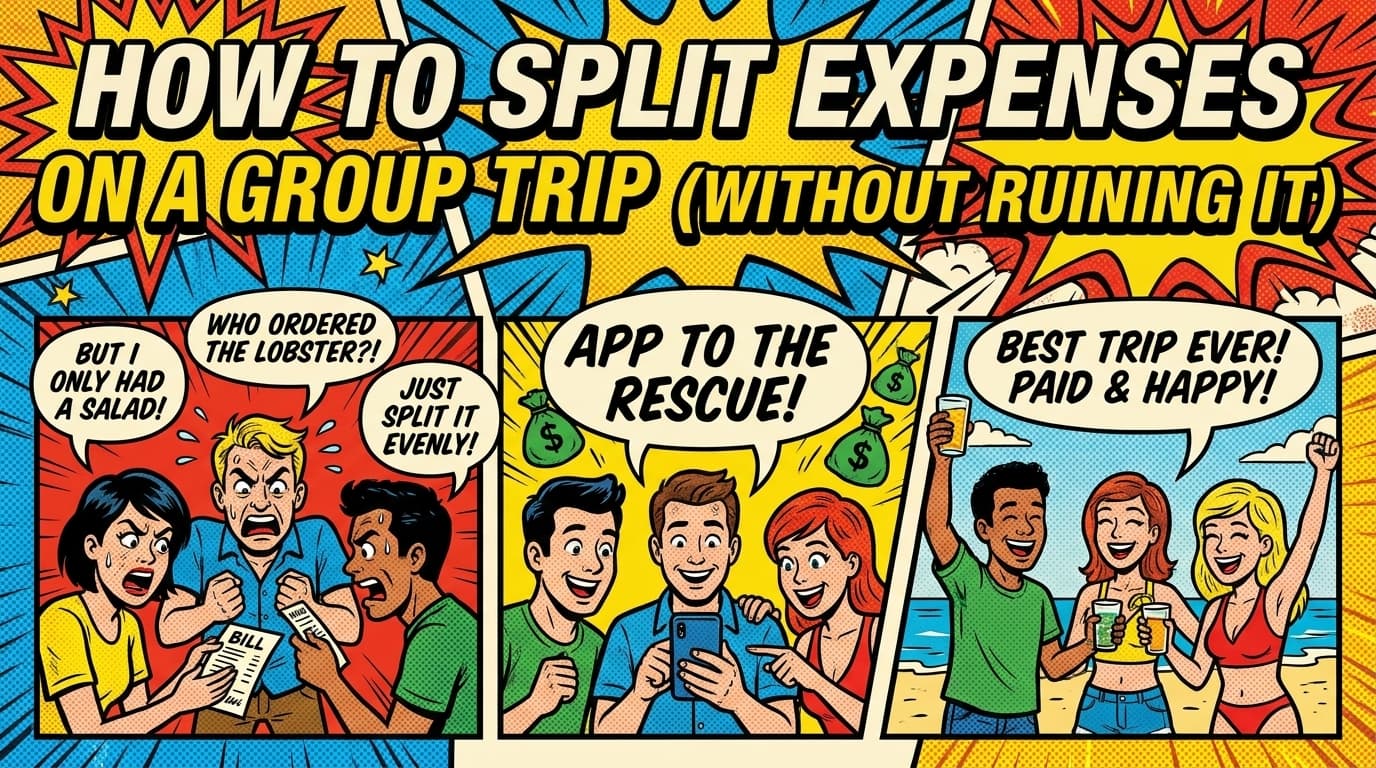
- Orders were wildly different (someone ordered lobster and wine, someone ordered salad): itemized.
Decide at the table, log in the app, done. Don't relitigate after.
Nobody has to feel weird about asking for itemized. It's just the rule.
Rule 8: Settle up within 7 days of getting home
Trip's over. Everyone's home. The app tells you who owes whom what. Pay within 7 days.
Not 7 weeks. Not 'when my next paycheck hits.' Not 'oh I forgot, sorry.' 7 days, like a bill.
The reason: settling fast is the difference between 'fun trip, let's do another' and 'fun trip but [person] still owes me $180.' The second one kills future trips. The first keeps the group alive.
Set a calendar reminder for 7 days after getting home. 'Settle trip expenses.' 30 seconds in the app.
The optional ninth rule: the 'no scorekeeping' culture
A lot of healthy friend groups add a soft rule on top: don't track micro-balances between trips.
One trip someone paid $30 more. The next trip someone else paid $20 more. Over 10 years of friendship, these roughly even out. Unless the gap is big (hundreds of dollars) or persistent (one person always takes), don't track.
This rule only works AFTER rules 1-8 are in place. If you're running settlements cleanly every trip, the 'let's not micro-score' rule keeps the friendship warm. If you're NOT running settlements cleanly, this rule turns into 'one person subsidizes everyone else.'
How to introduce these rules to your group
If your group is already traveling and hasn't had this conversation, here's a non-weird script:
'Hey, quick thing. I read a thing about group trip money stuff and it made me realize we should set a few ground rules before the next one. Nothing crazy, just stuff like: log expenses as they happen, settle within a week after. Mind if I drop some ideas and we nail them down?'
Then post the rules. Invite pushback. Adjust to what your group agrees with. The rules don't have to be exactly these, they just have to be explicit.
Most friend groups never have this conversation and wish they had. The ones who do have it tend to travel together for decades.
One rule for the organizer
If you're the one who plans the trips, makes the bookings, and fronts the Airbnb, you're doing work. The group should thank you, pay you back fast, and not expect you to also absorb the 'I forgot' costs.
You're allowed to say: 'I love organizing these, but I need everyone to pay their share within a week, and I need people to actually commit before I book.' That's not nagging. It's the minimum.
The pattern that keeps groups traveling
Groups that travel together for years share one thing: they talk about money openly, early, and without shame. Groups that fall apart share one thing: they pretend money isn't a thing, then suddenly it's the only thing.
The eight rules above are just scaffolding for the first kind of group.
TL;DR
- State budgets as single numbers, before anyone books.
- One app, one source of truth, for every shared expense.
- Log expenses the same day. Memory decays fast.
- Airbnb splits by room, opt-ins are opt-in, no explanation required.
- Settle within 7 days of returning home. Every trip. Every time.
Frequently asked questions
What are the most important money rules for a group trip?
State real budgets out loud before booking, use one shared app for every expense, log costs the same day they happen, split Airbnbs by room rather than per head, make non-essential activities opt-in, and settle up within 7 days of getting home. These eight rules prevent almost all group trip money drama.
How soon should group trip expenses be settled after returning home?
Within 7 days, ideally. Settling fast is the single biggest difference between 'fun trip, let's do another' and 'fun trip but so-and-so still owes me $180.' Leaving reimbursements hanging past a couple weeks is where friendships start to sour.
What does 'opt-in' mean for group trip activities?
Non-essential activities (fancy dinners, excursions, spa days) are offered to the group, but anyone can pass without explanation. 'I'll pass this time' is a complete answer. The rule makes mixed-budget trips work because nobody is forced into overspending just to stay in the group.
Should friend groups keep score of who paid more across trips?
Only if the gaps are large or persistent. Over many trips, small differences tend to even out. But that 'no scorekeeping' culture only works if every individual trip is settled cleanly. Otherwise it becomes 'one person subsidizes everyone' without anyone noticing.
How do I introduce ground rules to a friend group that's never had them?
Bring it up casually and propose the rules as a shared convenience, not a lecture. 'Hey, before the next trip, can we agree on a few ground rules like logging expenses daily and settling within a week?' Most groups are relieved someone said it first.