The Group Trip Budget Meeting Nobody Wants (But Everyone Needs)
Skip the budget chat and the trip explodes. Here's how to run a 20-minute group trip budget meeting that nobody dreads and everyone signs off on.

Anna
Supasplit Team
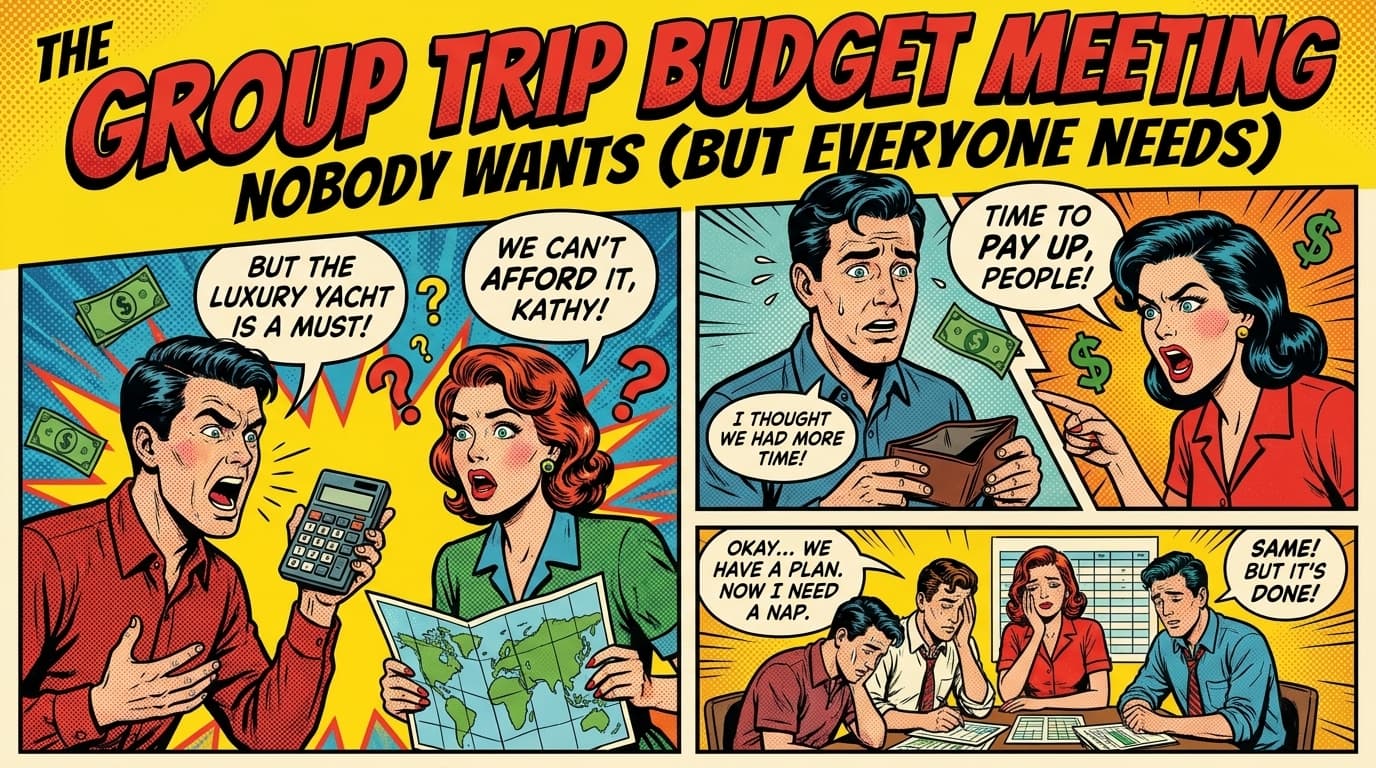
Six of you are planning a trip to Mexico City. The group chat is 200 messages deep. Someone has linked a boutique hotel for $280 a night. Someone else just dropped a hostel link for $22 a night. Nobody has used the word 'budget' yet and the trip is in three weeks.
This is the exact moment a 20-minute budget chat saves the entire trip. Here's how to run it.
Why the meeting exists
The main cause of group trip drama isn't different taste. It's silent disagreement about price.
One person has been saving for a nice trip and is assuming $3,500 total. Another is expecting $1,200 total and is quietly panicking every time someone links a nice hotel. They both pretend it's fine until the booking link arrives. Then one of them ghosts.
The budget meeting is how you surface this before it kills the trip.
When to have it
After 'we should do a trip' becomes 'okay, we're doing a trip.' Before anyone books anything. Before the group chat has 80 hotel links.
If you've already started booking, have it now anyway. Better late than post-trip resentment.
Who runs it
Whoever started the trip or is doing the most coordination. If that's you, congrats, you're running the budget meeting. It's 20 minutes and it prevents four separate future fights. Worth it.
The four-question meeting
Get everyone on a call (or in a group chat where people actually reply). Ask these four questions, in order:
1. What's the all-in budget you're comfortable with, including flight, lodging, food, activities?
Give everyone 60 seconds to think. Then have everyone share a number, not a range. Ranges hide discomfort. A single number forces clarity.
Write down every number. Do not judge any number. The person saying $700 and the person saying $4,000 are both telling the truth.
2. What's the destination you each actually want, given that number?
Some people say 'Mexico City' thinking it's a budget trip. Others say 'Mexico City' thinking it's a boutique hotel and Pujol. Get concrete. 'What does a good version of this trip look like for you?'
3. What's the 'hard line' cost?
For each person: what's the number above which you just can't do it? This isn't 'what would you prefer,' it's 'what makes you bail on the trip.'
4. What are your non-negotiables?
One each. Everyone says their one thing. 'I need my own room.' 'I want to eat at one fancy restaurant.' 'I can't do more than two activities a day.'
What you do with the answers
Take the lowest 'hard line' number. That's your ceiling for the core trip.
Then look at the non-negotiables. Is there any conflict? (E.g., one person needs a private room, one person wants a cheap hostel, same trip.) If yes, resolve now, not during booking.
Draft a core plan that fits the lowest number with the non-negotiables respected. Present it to the group: 'Here's the base trip. Everyone good?'
The opt-in layer
Above the core trip, add optional stuff. The nice dinner. The extra activity. The spa day.
Anyone can opt in. Anyone can opt out. Nobody explains why.
This is the single structure that makes mixed-budget group trips work. It lets the splurger splurge and the saver save without anyone feeling excluded or judged.
Examples of good opt-ins:
- A $120 fancy dinner on one night (everyone else can eat at the Airbnb)
- A $90 salsa class (some people dance, others read)
- A $200 day trip to Teotihuacan (skip if you want a rest day)
The 'how we split stuff' paragraph
Before you end the meeting, get one more thing agreed: the splitting rules.
- Airbnb: by room or by person? (See our Airbnb split guide.)
- Groceries for the house: split equally?
- Restaurants: equal or itemized?
- Shared ride from the airport: split by passenger?
- The 'we'll sort it out later' items: who's logging them, and where?
Decide once. Write it in the group chat. Now everyone's on the same rulebook.
The "I can front it" person
Every group trip has one or two people willing to put the Airbnb or activity on their card. Clarify:
- Who's fronting what
- When they need to be repaid (before the trip, during, after)
- How (Venmo, bill-split app, cash)
The worst pattern: one person fronts $1,800 for the Airbnb and spends two months chasing six friends afterward. Use an app, log it at the time of booking, and set an expectation of 'everyone paid within 30 days' or 'settled on arrival.'
What NOT to do
- Don't let the silent person stay silent. If someone's not answering budget questions, ping them directly. Their number matters.
- Don't assume everyone's budget matches yours. Your 'reasonable' is someone else's 'splurge' and someone else's 'cheap.' Get the actual numbers.
- Don't price out the lowest-budget person without saying so. If the trip you want to take genuinely doesn't fit their budget, tell them directly. Plan a separate thing together. Don't book an expensive trip and hope they drop out quietly.
- Don't skip the meeting because 'we're all friends, we'll figure it out.' That's how friendships get damaged. A 20-minute meeting now saves a year of tension later.
The script for "I can't afford this"
If you're the one whose budget is below the group's, here's the move:
'Hey, real talk, the number you all landed on is pretty tight for me. Can we look at a version that works for [my number]? If not, I totally get it, and we should do something else together when the timing works.'
You are not being a buzzkill. You're preventing a six-month credit card spiral and being honest. Most friend groups will adjust happily. The ones that don't weren't going to make you feel great on that trip anyway.
TL;DR
- Have a real budget meeting before anyone books. 20 minutes.
- Everyone shares a single number, not a range. Ranges hide discomfort.
- Plan to the lowest 'hard line' budget. That's the ceiling for the core trip.
- Add an opt-in layer for splurges. Anyone in, anyone out, no explanation.
- Agree on splitting rules and who's fronting what before the trip starts.
Frequently asked questions
When should a group have a trip budget meeting?
As soon as a trip is a real plan but before anyone books anything. If you've already started booking, do it now anyway. A 20-minute budget chat upfront prevents most of the friction that shows up later when payments are due.
How do you get everyone to share their real trip budget?
Ask for a single number, not a range. Write down every number without judgment. Then ask for a 'hard line' number, the amount above which they'd bail on the trip. The gap between comfortable and hard line tells you how much flex each person has.
What do you do when group members have very different budgets?
Plan the core trip to the lowest hard-line budget. Put any splurges (fancy dinner, extra activities, spa day) in an opt-in layer anyone can join or skip without explanation. This is the structure that lets mixed-budget groups travel together without anyone feeling priced out or held back.
Who should plan the group trip budget?
Usually whoever started the trip idea or is doing the most coordination. The meeting is 20 minutes and surfaces every issue that would otherwise become a group-chat fight later. Being the organizer is unpaid work, so the group should thank them and settle reimbursements fast.
How much buffer should you add to a group trip budget?
10-15% above what your math says. Quote everyone the higher number. Surprise costs (Uber surges, unplanned dinners, last-night drinks) always show up, and a buffer absorbs them. If the trip comes in under budget, everyone feels good getting a small refund.