How to Split Expenses on a Group Trip (Without Ruining It)
The complete guide to splitting group trip expenses, from Airbnbs and flights to late-night ramen runs. Proven systems, scripts, and the moves that save friendships.

Anna
Supasplit Team
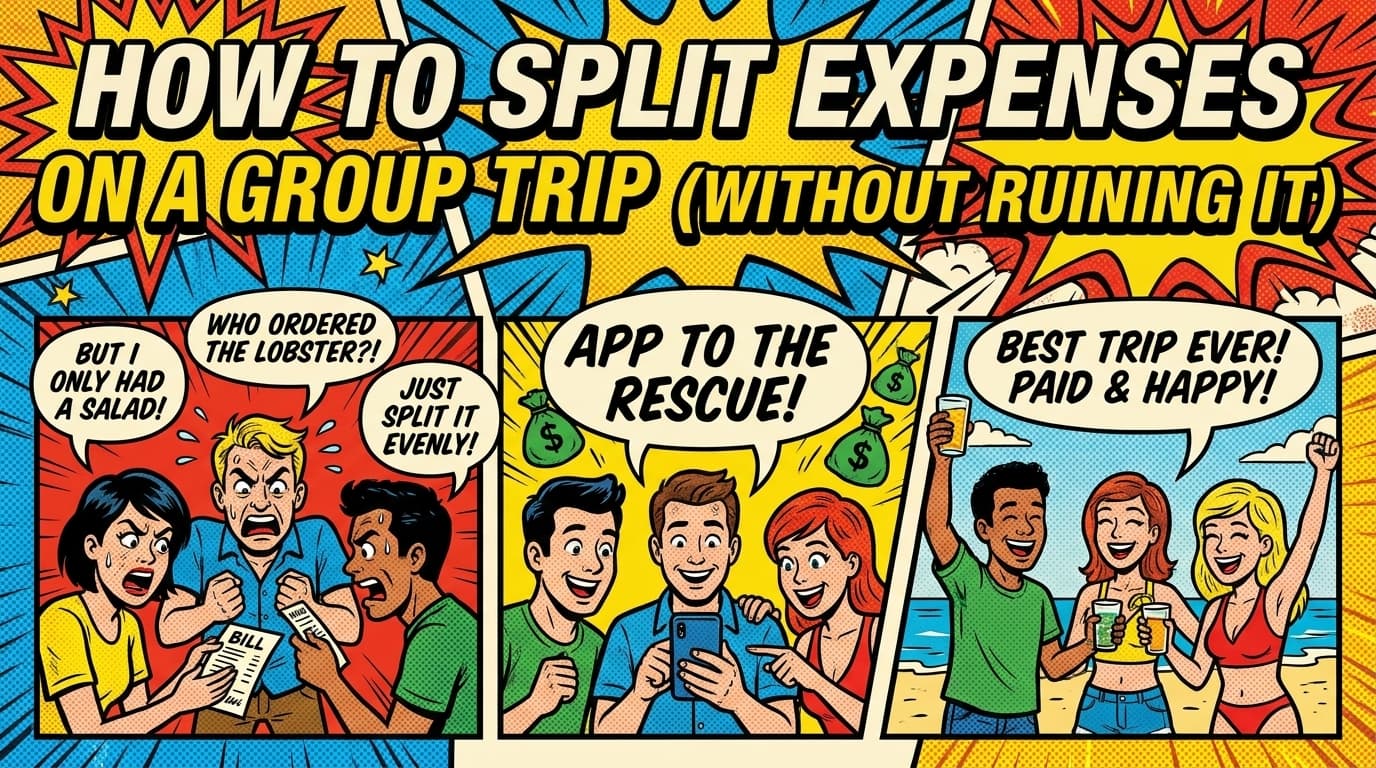
Nothing kills a group trip faster than coming home and realizing your "treasurer" friend is quietly fuming because she fronted $2,400 on her credit card and only got $1,800 back.
Group trips are amazing. The money part of group trips is chaos. This guide walks you through the whole thing, before you leave, while you're there, and when you get home, so everyone comes back still liking each other.
The two rules that fix 90% of trip money problems
Rule 1: Have a ten-minute money conversation before anyone books anything. Who's rooming where? What's the Airbnb budget? Are we splitting groceries? Are people on different budgets?
Rule 2: Use one tool to track everything as it happens, not at the end. End-of-trip reconciliations are where friendships go to die.
If you do nothing else, do those two things.
Before the trip: the four decisions that matter
1. Room situation
Are people sharing rooms or each paying for a private? If someone wants a private, they pay the premium, not the group.
For an Airbnb, split by room. If you have three bedrooms, one sleeps two couples and one solo, the solo person doesn't pay the same as a couple pays per person. They pay more per head, OR the couples pay more because they're getting a room each. One of those.
2. Big-ticket items
Flights, car rentals, Airbnbs, decide who books what and how it gets reimbursed. The clean move: one person books, pays with their card (hello miles), and everyone Venmos them within 48 hours. Not "eventually."
3. Shared vs. personal spending
What's shared kitty and what's everyone-for-themselves? Typical setup:
- Shared: Airbnb, rental car, group dinners, groceries for the house, big activities you all do
- Personal: flights (unless agreed otherwise), souvenirs, coffees you grab solo, side activities you do individually
4. Budget honesty
If one friend is tight on money and another is ready to blow $500 on a wine tasting, say it before the trip. Nobody wants to admit they're on a budget in the group chat, but it is 1000x better than them stressing the whole trip or bailing on activities last minute.
During the trip: the running-tally system
The best system for tracking expenses as you go:
Put one person in charge of "expenses you did NOT already split at the counter." If you Venmoed your own portion of the $40 Uber at the airport, it doesn't need to go in the app. If someone's card covered a $180 dinner for six, that's going in the app.
Log it right then. Not later. Not at the end. Right when it happens, phone comes out, amount gets entered. Takes 15 seconds.
Every two days (ish), everyone checks the running totals and settles up whatever's easy to settle on the spot.
Restaurant tabs on vacation: a fast framework
Group dinners at restaurants are where the math gets messy. Three options that actually work:
- One person pays, split equally at the end of the trip, works when meals are all similar in price.
- Itemize every dinner, works if orders varied a lot and you want it exactly right.
- Round-robin, a different person pays each dinner, and nobody settles up at all, it evens out. Works great for close friends on 4-5 day trips.
For restaurants abroad, also factor in: different tipping customs (see our country tipping guide) and conversion rates if everyone's paying in a currency that's not their home one.
Groceries and shared household stuff
For Airbnbs, someone will grocery-run once. Log it. Split it equally among everyone who'll eat the food (which is usually everyone).
Do NOT try to itemize who drank which bottle of wine. Life is too short.
Activities: the opt-in model
Not every activity needs to be "everyone's coming." The group trip that works best runs like this:
- Each day has one or two "group activities", dinner, beach day, the big hike
- Side activities are opt-in, museum, spa, surfing lesson
- Only the people who do the activity split its cost
- Nobody guilts anyone into optional stuff
This is also the antidote to budget mismatches. The friend on a budget skips the $200 sunset cruise, doesn't feel bad, and nobody else pays for them.
The "I'll Venmo you" problem
You know the friend. The trip ends, they owe $380, and it's been eleven days and they've posted 14 Instagram stories but haven't Venmoed you.
Prevention beats collection:
- Reimburse in real-time during the trip, not at the end
- Use an app that sends automatic reminders instead of you having to
- Settle up once at a set time (e.g., last morning of the trip before checkout) so it's a shared ritual, not a manager-employee exchange
If they still ghost, the move is a one-line message: "Hey, you owe $380 from the trip, send when you get a sec?" Not mean. Not apologetic. Neutral.
Multi-currency trips: the math trap
If you're traveling internationally with friends who live in different countries (or are paying in different currencies), pick one currency for the trip and track everything in it. Even if one person paid in euros, log the USD or GBP equivalent, or use an app that does the conversion automatically.
Otherwise the final reckoning is "wait, what exchange rate do we use?" which is the 2025 version of a math homework problem nobody signed up for.
After the trip: the 48-hour rule
The friction of settling up scales with time. After the trip:
- 24 hours: send the final split to the group, everyone knows what they owe who
- 48 hours: everyone pays
- Week 1: last friendly nudge if anyone's outstanding
- Week 2: you have to decide if it's worth the awkward conversation or if you just eat it
Having the app do this for you turns the whole thing into a calm notification loop instead of a nagging manager situation.
TL;DR
- Ten-minute money talk before booking anything.
- One tool tracks every shared expense in real-time.
- Split by room, not per-person, on Airbnbs.
- Opt-in model for side activities, don't force budget-tight friends into $200 sunset cruises.
- Settle up within 48 hours of getting home, not "eventually."
Frequently asked questions
What's the best way to split an Airbnb between couples and solo travelers?
Either split by room (each room costs the same regardless of how many people sleep in it, solo traveler gets stuck paying more per head), or charge couples proportionally more since they get a private room. Decide before anyone books.
How do I handle group trips when friends have very different budgets?
Have the honest conversation before you pick a destination. Use the opt-in model for activities, core group stuff everyone pays for, optional extras paid only by people doing them. Plan meals at mixed price points.
Who should be in charge of tracking trip expenses?
Everyone. Use a shared app where anyone can add an expense when they pay for something shared. The old model of one person being the 'trip accountant' is how that person ends up resentful.
When should we settle up after a group trip?
Within 48 hours of getting home. The friction of paying someone back scales with time. Settle before the laundry from your suitcase is put away.
What if one person on the trip refuses to pay what they owe?
Send one neutral follow-up. If they still don't pay, it's not really about the money anymore, it's a friendship signal. Decide what you want to do with that information.