The Sublet Agreement Every Roommate Should Sign Before Letting Someone Crash
Subletting your room to someone for a summer or semester? Here's the sublet roommate agreement that protects you, the existing roommates, and the temporary tenant.

Anna
Supasplit Team
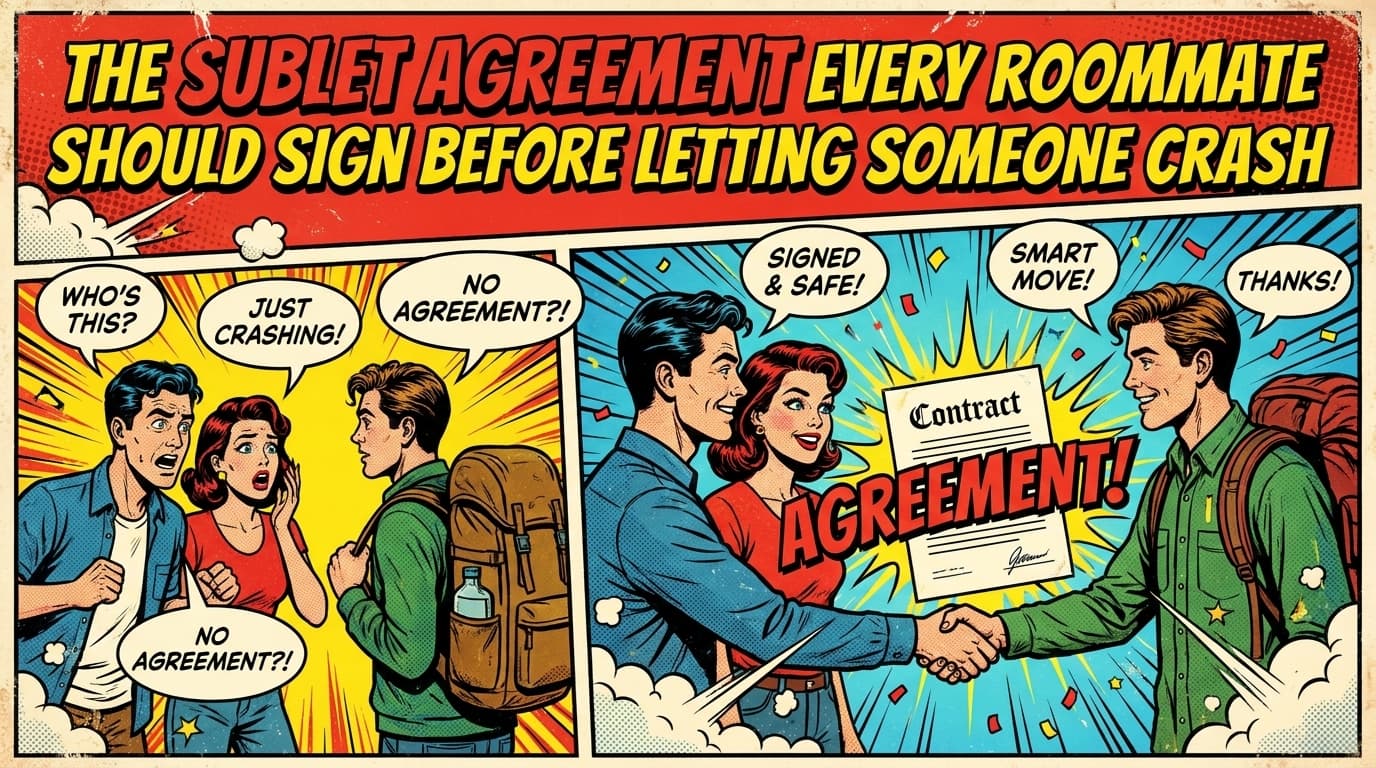
Subletting your room sounds simple. You're gone for the summer, your friend's friend is in town, the rent gets covered. Win win.
Then the subletter doesn't pay. Or they break a window. Or your original roommates didn't actually agree to having them, and now there's a stranger in the apartment and everyone is uncomfortable.
The fix is a one-page sublet agreement, signed before the subletter moves in. Here's what goes in it, and how to set it up without making things awkward.
Step 1: check whether subletting is allowed
Before anything else, read your lease.
Most leases either:
- Allow subletting with landlord approval (most common)
- Allow subletting without notice (rare)
- Forbid subletting entirely (also common)
If your lease forbids it, you can't legally sublet. Doing it anyway can be lease violation, with consequences ranging from a warning letter to eviction.
If approval is required, get it in writing. Email works. "Hi, I'd like to sublet my room from June 1 to August 31 to [name]. Can you confirm this is OK and what paperwork you need?" Keep the response.
Step 2: get the original roommates on board
This is the part most subletters skip and most household drama starts from.
Before you finalize anything, talk to your roommates:
- Who is the subletter, and how do you know them?
- What are the dates?
- Are they working from home, going out a lot, bringing partners over, all questions you'd ask about a new full-time roommate?
- What happens if they cause issues?
Your roommates have veto power, full stop. You're not introducing a stranger into shared space against their wishes. If they say no, you find a different subletter or don't sublet.
Step 3: what goes in a sublet agreement
A good sublet agreement is one or two pages. Cover:
Basic information
- Names of the original tenant, subletter, and other roommates
- The address
- Sublet period (start and end dates)
- Move-in and move-out times
Rent and fees
- Total rent the subletter owes
- Payment frequency (monthly, weekly, lump-sum)
- Where and how rent is paid
- Late fees if any
- What utilities are included vs. extra
Security deposit
- Amount the subletter pays (typically equal to one month's share)
- Conditions for return (cleanliness, no damage)
- Who holds it during the sublet
House rules
- Quiet hours, guest policy, smoking policy
- Shared spaces (kitchen, bathroom) expectations
- Cleaning expectations
- Anything from your existing roommate agreement
Liability and damage
- Subletter is responsible for damage they or their guests cause
- The original tenant remains responsible to the landlord for the lease (this is true legally no matter what)
- Subletter shouldn't make changes to the apartment (paint, holes, big furniture)
Early termination
- What happens if the subletter leaves early
- What happens if the original tenant returns early
- Notice period for either side
Signatures
- Original tenant, subletter, and ideally the other roommates (acknowledging they consent)
Step 4: the security deposit conversation
This is the part where sublets often fall apart.
The subletter should pay a security deposit equal to about one month's share of rent. The original tenant holds it, returns it at the end of the sublet if there's no damage.
Why not pass it to the landlord? Because the landlord is holding the original tenant's deposit. The sublet deposit is a private arrangement between the tenant and the subletter, not a lease deposit.
Where to hold it: a separate checking account, not commingled with your spending money. You want to be able to return the exact amount cleanly.
If the subletter damages something, the cost comes out of their deposit. If damage exceeds the deposit, they owe the difference (which is hard to collect from someone who's already moved on, hence the deposit).
Step 5: rent collection
From the original tenant's perspective: you're still responsible to the landlord for the full rent. So you need to make sure the subletter pays you reliably.
Options:
Up-front lump sum. Subletter pays for the whole period at move-in. Best if they can afford it. Eliminates monthly collection risk.
First and last month. Subletter pays first month plus last month's rent upfront. Then monthly thereafter. Reduces risk if they bail.
Monthly. Subletter pays you each month, you pay the landlord. Most common but riskiest. Have a clear due date.
For monthly arrangements, agree on:
- Specific due date (e.g., 1st of the month, with 5-day grace)
- Late fee structure
- Method of payment (Venmo, Zelle, bank transfer)
- Consequence if they miss two months in a row (usually they have to leave)
What about utilities during a sublet?
Two approaches:
Bundled rent. The subletter pays a flat monthly amount that includes their share of utilities. Easiest, but you may eat losses if utility bills spike.
Rent plus actual utilities. Subletter pays rent monthly, and a separate utility share when the bills come in. More accurate, more admin.
For short sublets (1-3 months), bundled rent is usually the right call. For longer sublets, the actual-utilities model is fairer to everyone.
How to handle the existing roommate agreement
If your household has a roommate agreement, the subletter should be expected to follow it for the period they're there.
Attach the relevant sections to the sublet agreement, or summarize the key rules (quiet hours, guests, cleaning, kitchen norms). Don't assume they'll figure it out.
When the subletter wants to stay longer
This happens. The subletter was there for 2 months, they love the apartment, they want to extend.
Before agreeing:
- Talk to the roommates. They have to be on board.
- Talk to the landlord. The lease might need amending.
- Decide if you're returning. If you're not coming back, the subletter is essentially replacing you on the lease, which is a different conversation (assignment, not sublease).
Don't let the sublet drift into a long-term tenancy without paperwork updates.
Sublet vs. assignment
Quick clarification of terms:
Sublet: the original tenant keeps the lease, lets someone temporarily occupy the space. Original tenant remains responsible to the landlord.
Assignment: the original tenant transfers the lease to a new tenant entirely. New tenant takes over, original tenant is no longer on the lease.
Most roommate-style situations are sublets. Assignment requires landlord approval and a formal lease change, and is what you want if you're not planning to return.
TL;DR
- Check your lease first. Subletting may require landlord approval, and some leases forbid it.
- Get original roommates' consent before the subletter moves in. They have veto power.
- Use a one-page agreement covering dates, rent, deposit, house rules, and damage liability.
- Collect a security deposit equal to about one month's share, held in a separate account.
- Prefer up-front payment or first+last, monthly collection has more risk.
- The original tenant stays responsible to the landlord. Subletting doesn't transfer that obligation.
Frequently asked questions
Do I need a written sublet agreement?
Yes. Even if the subletter is a friend or a friend of a friend, a written agreement protects everyone. It clarifies the dates, the rent, the deposit, and what happens if things go sideways. A one-page document that everyone signs is enough. Verbal agreements are where sublets fall apart.
Can my roommates refuse to let me sublet?
Yes, in the sense that you can't introduce a new person into shared space against their wishes. They effectively have veto power over who lives in the household. Talk to them before you make commitments to a subletter, and respect their concerns about who they'll be living with.
How much security deposit should I collect from a subletter?
Typically one month's share of rent. That's enough to cover most damage and motivate the subletter to leave the space in good condition. Hold it in a separate account so you can return the exact amount cleanly. Don't commingle it with your spending money.
What if the subletter doesn't pay rent?
You're still responsible to the landlord for the full rent. Have a clear payment schedule and late fee policy in the agreement, and consider collecting first and last month's rent upfront to reduce risk. If they stop paying mid-sublet, you may need to end the sublet early, which is why a clear termination clause matters.
Is subletting allowed by my landlord?
Check your lease. Most allow subletting with landlord approval, some forbid it entirely, a few allow it freely. If approval is required, get it in writing (an email is fine). Don't sublet against the terms of your lease, the consequences can range from a warning to eviction.