Splitting Wedding Costs in 2026: Tradition Is Out, Math Is In
How modern couples actually split wedding costs. The old rules are dead, here's how to divide the bill between you, your parents, and their parents without the awkwardness.

Anna
Supasplit Team
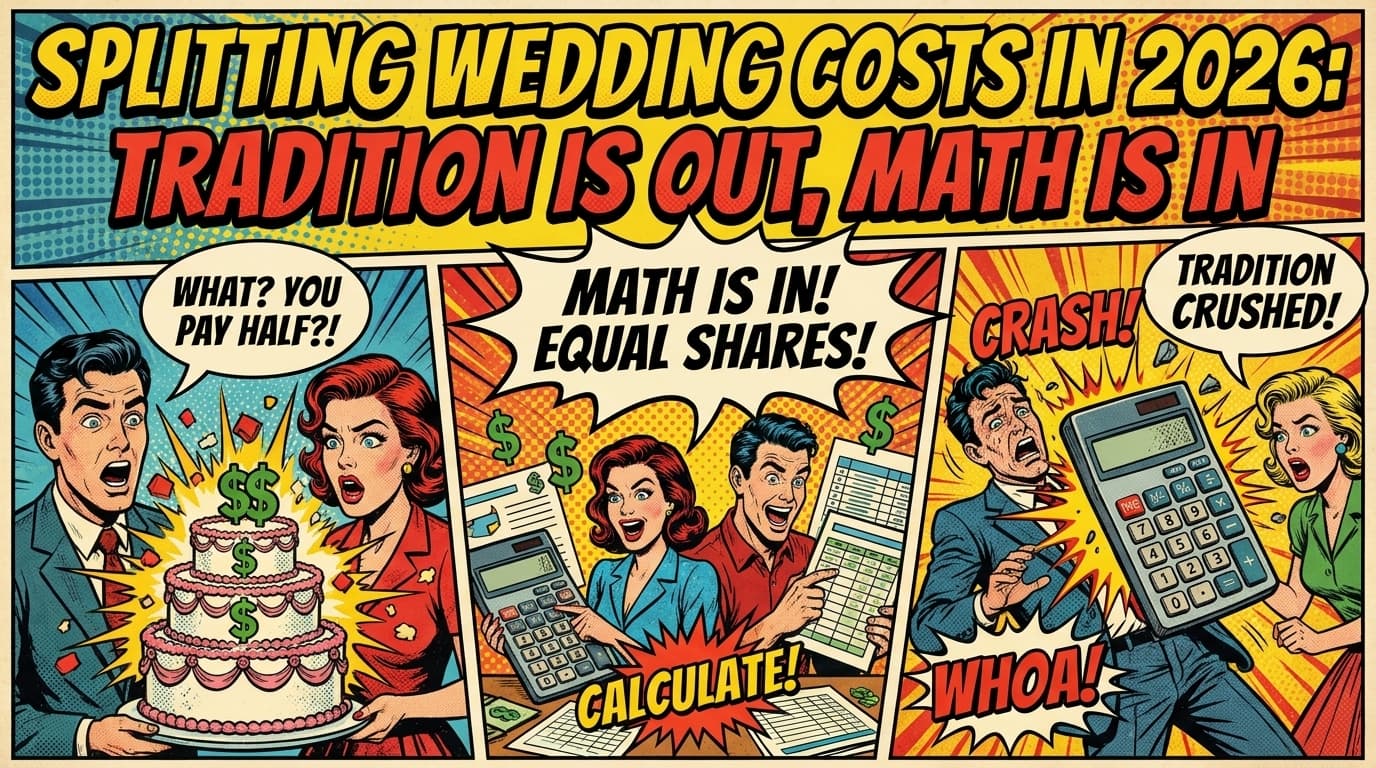
You're engaged. Nice. Now here comes the fun part: figuring out who pays for what between the two of you, your parents, their parents, and possibly a third group of aunts who have opinions.
The old tradition was simple and mostly gone. The bride's family paid for the wedding, the groom's family paid for the rehearsal dinner, the end. That broke down the moment weddings got expensive, incomes got complicated, and "bride" and "groom" stopped being the only options.
Here's how actual couples in 2026 divide wedding costs, with the conversation scripts that keep it from getting weird.
The money reality of modern weddings
A few shifts worth naming upfront:
- Couples are older. They often have savings and real incomes of their own before getting married.
- Parents' financial situations vary wildly. Your parents might be flush, your partner's might be stretched, or the reverse. Pretending the two families contribute equally often isn't honest.
- The "who pays for what" tradition assumes a specific family structure that a lot of couples don't have.
- Average wedding costs in the US hover around $30,000-$35,000. That's a real negotiation, not a rounding error.
So throw out the old checklist. Start from scratch.
The three-bucket framework
Every dollar spent on the wedding comes from one of three buckets:
Bucket 1: you two. Your combined savings, or money you're pulling from one or both personal accounts.
Bucket 2: your family. Contributions from your parents, grandparents, siblings.
Bucket 3: their family. Contributions from your partner's side.
The first job is figuring out what each bucket can actually hold, before you design a wedding around numbers that don't exist.
Step 1: the conversations with parents
You and your partner should have the conversation with your own parents separately. Not in a joint summit. That's how things get awkward.
The script:
"Hey, we're starting to plan the wedding and we want to figure out the budget early. Is there a number you'd feel comfortable contributing? No pressure either way, we just want to plan around what's real."
Listen to the actual answer. "I'd like to give $10,000" is different from "whatever you need" is different from a long silence. Don't push past what someone offers.
After both of you have had your conversations, swap notes:
- How much each family is offering
- Any strings attached ("we'll pay for the venue but only if it's local")
- Timing ("we can give half now, half next year")
Now you know what buckets 2 and 3 hold. The rest is yours.
Step 2: your own contribution
Look at your joint savings, any money earmarked for the wedding, and what you can realistically add between now and the big day.
One rule: don't put the wedding on credit cards you can't pay off in a month. Debt that outlives the wedding outlives the honeymoon glow.
Total up the three buckets. That's your real budget. Design the wedding from that number, backwards.
Step 3: who pays for what, inside the buckets
This is where the old tradition used to tell you. In 2026, here's the cleaner approach:
Option A: one pool. All three buckets go into a single pot. You pay every vendor from it. Nobody owns specific line items.
- Pros: easiest to manage, nobody fights over which bucket pays for the band.
- Cons: requires trust. Parents who want to "pay for the flowers specifically" don't get that satisfaction.
Option B: bucket-by-item. Your parents cover venue. Their parents cover catering. You two cover everything else.
- Pros: each contributor has a clear, tangible thing they paid for.
- Cons: requires you to match contributions to actual costs, and sometimes costs move (the venue went up, catering came in under budget).
Most couples end up with Option A for simplicity, but there's a middle ground: parents contribute a lump sum, you assign that sum to specific bigger items for their "ownership," and you handle the rest from the pool.
Step 4: how you two split your share
Inside bucket 1 (you two), split based on your existing couple-money system:
- If you're on yours-mine-ours, most couples use proportional contributions from each personal account.
- If you're fully merged, it's coming from one joint pot, no split needed.
- If you're still fully separate, decide now: 50/50, proportional, or one of you paying more because of a specific reason you both agree on.
Write it down. Revisit the number if either income changes during planning. This is not the time to default to vibes.
Step 5: the surprise costs
People always forget these, and they always come due:
- Taxes and gratuity. Often 20-25% on top of vendor quotes.
- Marriage license. $30-$100 depending on state, boring but required.
- Attire alterations. More than the dress or suit itself, sometimes.
- Day-of cash tips. For vendors, officiants, transport staff.
- Hair and makeup trials. You'll do at least one before the real day.
- Hotel blocks and getting-ready suites. Sometimes on you, sometimes not.
- Post-wedding brunch. Optional, but people plan for it.
- Honeymoon. Separate budget or same? Decide early.
Add a 10% contingency to whatever you budget. You will use it.
The awkward cases
One family is wealthier than the other. Don't force an even match. Accept the offered contributions and redesign scope to fit. Parents on the lower-contribution side often feel weird about this, a small gesture like "your parents are paying for X because it was so meaningful to them" helps.
Divorced parents on either side. Have separate conversations with each parent. Don't assume they'll contribute jointly. They might, they might not.
No parental contribution. Totally normal. Bucket 1 is the entire budget. Design the wedding from that number and don't apologize. Tiny weddings are having a moment for a reason.
Someone offers then backs out. It happens, often for financial reasons they won't fully explain. Adjust gracefully. Don't make it a thing.
Tracking during planning
A wedding has 30-50 line items over 12-18 months. You need something to track who paid what, which deposits are in, and what's still owed. A shared note or spreadsheet works fine. A split-tracking app works better, especially for the dozens of small pre-wedding outings where one of you fronts something.
Do not trust memory. Twelve months in, nobody remembers that one of you paid the calligrapher deposit in March.
TL;DR
- Old wedding tradition is dead. Start from a three-bucket model: you two, your family, their family.
- Have the parent conversations separately. Get honest numbers before designing anything.
- Design the wedding around the real budget. Not a Pinterest board that assumes $50K.
- Pool the money, assign ownership after the fact. Option A is cleaner than bucket-by-item accounting.
- Track every deposit and reimbursement. Memory will fail you over 12-18 months of planning.
Frequently asked questions
Who traditionally pays for the wedding?
The traditional rule was that the bride's family paid for most of the wedding and the groom's family paid for the rehearsal dinner. That's mostly gone in 2026. Modern couples usually pool money from three sources: themselves, one set of parents, and the other set of parents, with contributions based on what each family can actually afford.
How do couples split wedding costs between themselves?
Most couples use whatever splitting method they already use as a couple. Fully joint means it comes from one pot. Yours-mine-ours means each partner contributes from their personal account, often proportionally to income. Fully separate couples pick one method (50/50, proportional, or based on savings) and write it down.
Is it okay to accept money from parents for a wedding?
Yes, if it comes without strings you can't live with. Money attached to specific demands (guest list vetoes, venue dictates) is a negotiation, not a gift. Accept contributions that come freely, decline or negotiate ones that come with conditions you don't want.
What's the average cost of a wedding in 2026?
Around $30,000-$35,000 in the US, though the range is massive. Weddings under $10,000 and over $100,000 are both common. The 'average' is less useful than your actual three-bucket budget: what you two can contribute, plus what each family offers.
How do we handle unequal contributions from our families?
Don't force an even match. Accept the offered contributions, redesign scope to fit the total, and make sure the family contributing less doesn't feel embarrassed. A small gesture, like noting that their contribution funded something specific and meaningful, often helps.