Splitting Tours, Excursions, and Activities on a Group Trip
Some friends want the wine tour, others want the hike, two want neither. Here's how to split activity costs fairly without bullying anyone in or out.

Anna
Supasplit Team
On a group trip, accommodation is the easy split. Everyone sleeps somewhere. Restaurants are usually fine. Whoever's at the meal pays for the meal.
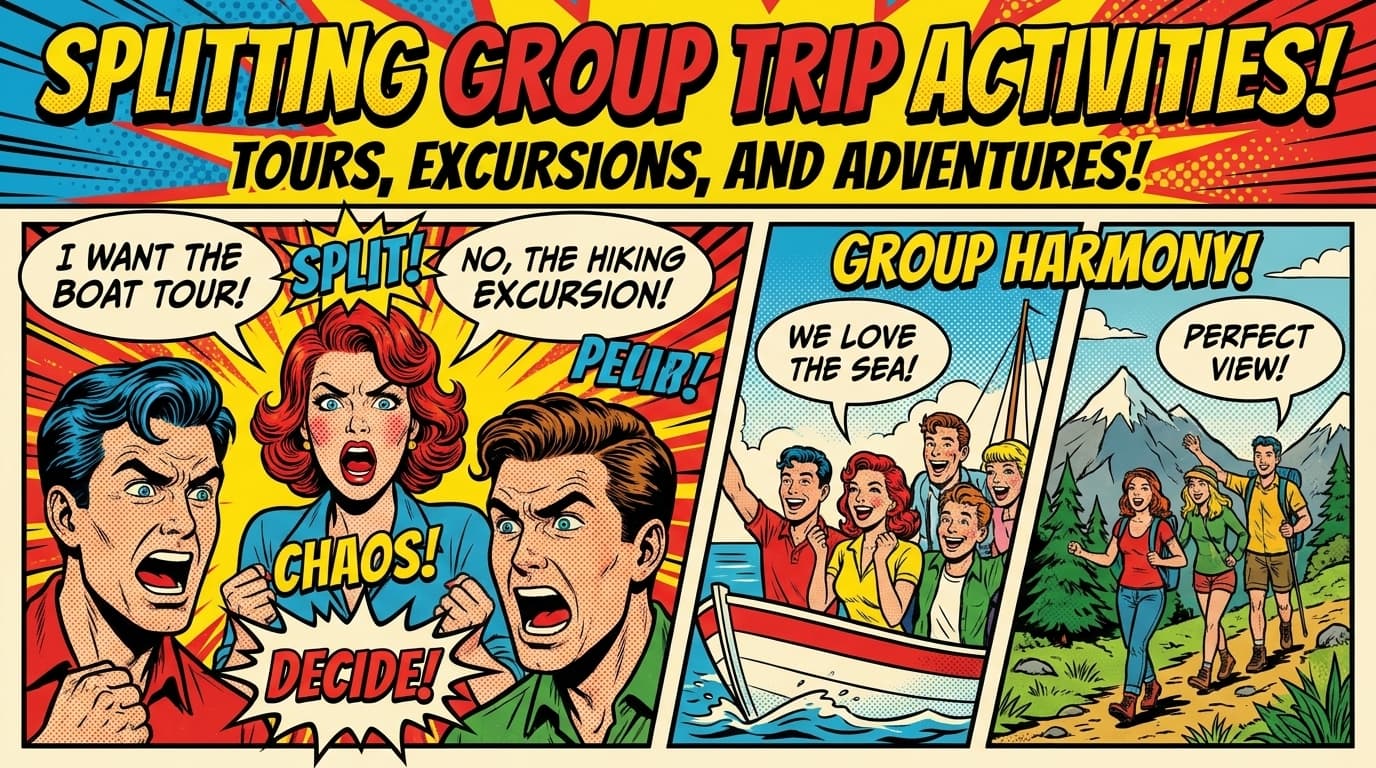
Activities are where it gets weird. Some friends want the $180/person wine tour. Others want the free hike. Two want to just sit by the pool. One wants to spend $300 on a private boat charter.
Here's how to split activity costs without forcing anyone into experiences they didn't want, and without making the activity-skipper feel like a bad sport.
The non-negotiable rule: whoever participates pays
Activity costs are paid by activity participants. Always.
The friend who skipped the wine tour to read at the Airbnb doesn't pay for the wine tour. The two friends who didn't go skiing aren't on the hook for the lift tickets.
This is the most important and most often-violated rule in group-trip economics.
Why it gets violated:
- The participants want to feel like they're "all in this together" and casually loop everyone in.
- The booker pays for everyone upfront and forgets to itemize.
- One participant is the friend's friend who isn't comfortable asking for reimbursement.
- "It's just $40" creep, where everyone keeps absorbing small unfair charges.
Don't let any of this happen. Activity costs go to participants. Full stop.
How to talk about activities upfront
Before the trip, write down a rough plan. For each activity:
- What is it?
- How much does it cost per person?
- Who's in?
Get RSVPs. Loose, but tracked.
This prevents the on-the-day awkwardness of "so are you coming or not?" with the implied "and are you paying anyway?" subtext.
How to handle the on-trip impulse activity
Not everything is planned. Mid-trip someone suggests a sunset cruise.
Flow:
- Toss it in the group chat first. "Hey, sunset cruise is $60/person, who's in?"
- Get explicit confirmations. "I'm in" beats "sure I guess."
- One person books for the participants and collects.
- People who say maybe later commit to a yes or no before the booking deadline.
- Anyone who said no doesn't pay, even if they could've been there.
The rhythm is: explicit RSVP, explicit booking, explicit collection. Nothing implied.
The "I might join" problem
The friend who says "yeah maybe I'll come, I'll see how I feel" creates a billing problem. The booker has to either:
- Book without them, possibly leaving them out if they decide to come
- Book with them, paying for them if they don't show
- Push them to commit
The right move: push for a yes or no by a specific time. "I need to book by 4pm, can you let me know by 3?"
If they don't commit by the deadline, they're a no. Book without them. If they show up anyway, that's on them to figure out (often they can join with a walk-in fee).
When the booker prepays for the group
For activities that require pre-booking (theme parks, popular tours, sold-out experiences), one person often books and pays for the group.
Rules:
- Get commitments before booking. No "I'm tentative" buys here.
- Use a deposit system if possible. Ask participants to Venmo their share before you book.
- For non-refundable bookings, the participant pays even if they don't go. Their commitment, their cost.
- For refundable bookings, the policy is clearer. Whoever cancels by the refund deadline owes nothing.
The booker takes on financial risk by paying upfront. The group should pay back fast.
The premium-vs-budget split
Sometimes the activity itself has tiers. The fancy version vs. the basic version.
Example: a winery offering a $40 standard tasting and a $120 premium tasting. Some friends want the premium, others want the standard.
Handle it cleanly:
- Each person pays for the tier they chose.
- Don't lump everyone into the premium price because two people wanted it.
- Don't pressure people into a tier they didn't pick.
If the wine tour group is in the same room but on different tasting menus, each pays their tier. The math is simple. Don't overcomplicate.
Group discounts vs. individual prices
Many activities offer group discounts at certain headcounts (10+ for a tour, 6+ for a boat charter, etc.).
If the group discount kicks in only when more people join:
- Discuss it as a group: "if 8 of us go, it's $40 each. If only 5, it's $55 each."
- Each person decides if they want to be at the higher price or skip.
- The decision is theirs, not pressured by the group's discount potential.
Don't guilt people into participating just to hit a group discount threshold. "We can't get the deal unless you come" is manipulation, not invitation.
The expensive activity one person really wants
Sometimes one friend has a bucket-list activity. A helicopter tour, a private guide, a luxury experience. $400+/person.
Options:
- They go alone or with whoever wants to opt in. Most common, cleanest.
- They sponsor the experience for someone they want to share it with. Generous, but unusual.
- They lobby for the group to do it together, with each person paying their own.
The friend should respect that not everyone has the budget or interest. Inviting is fine. Pressuring isn't.
The rest of the group should respect that this is their friend's special thing. "That's not for me" is a fine response. "That's wasteful" or "why would you do that" isn't.
Time-based activities (some friends join, some don't)
A half-day activity (a hike, a tour) where some friends do it and others don't:
- Activity cost: participants only.
- Transport to the activity: participants split.
- Meals associated with the activity: participants only.
- Childcare or pet care during the activity: discussion (sometimes participant-only, sometimes group-shared depending on context).
The group reconvenes at the end of the activity. Stragglers join up. Skippers had their own thing.
What about the "loose group" trip?
Some trips are looser. People wander off in pairs or solo, meet up for dinners, no formal plan.
For these:
- Daily expenses (groceries, accommodation) split by the formal trip rules.
- Activities tracked individually. Whoever does what pays.
- One nightly dinner is the gathering point, split per restaurant rules.
This style of trip relies on individual budgeting more than group coordination. Each person manages their own activity spending.
What if the budget-conscious friend feels left out?
Real dynamic: the friend who can't afford the premium activities feels excluded from the trip.
Ways to handle it:
- Build in free or low-cost activities so they have things to participate in.
- The activity-budgeting friend is honest about constraints upfront. "I can do most things but not the $200 boat day."
- The group respects that some skips are budget-related, without making it weird.
- One friend can voluntarily sponsor an experience for a friend, but only as a real gift, not a one-sided pressure.
A good trip has activities at multiple price points. "Free hike day" plus "paid tour day" plus "pool day" gives everyone a way to participate.
Tracking everything
For trips with 4+ people and 5+ activities, manual tracking is doomed.
Use a shared expense app:
- Add each activity as it happens.
- Tag who participated.
- The app handles the math.
- Settle at trip end.
No "who was on the boat trip again?" four weeks after the fact.
TL;DR
- Whoever participates in an activity pays for that activity. Skippers don't pay.
- Get explicit RSVPs for any activity that requires booking ahead.
- The booker takes financial risk and should be paid back quickly.
- For tiered activities, each person pays for their chosen tier.
- Group discounts shouldn't pressure people into joining.
- Mix activity price points so the budget-conscious can participate without skipping everything.
- Track in an app. "We'll figure it out" doesn't work for trip-wide activity math.
Frequently asked questions
How should friends split activity costs on a group trip?
Whoever participates in an activity pays for it. Friends who skip the tour, the hike, or the boat trip aren't on the hook for it. This is the most important rule in group-trip economics and the most often violated. Don't let activity costs creep silently across the whole group.
What if someone says 'maybe' about an activity but doesn't show up?
Set a clear booking deadline and ask for a yes or no by then. If they don't commit, they're a no, book without them. If you booked for them based on a soft maybe and they don't show, the policy you set upfront determines whether they pay. Generally: their commitment, their cost.
Who pays for the activity when one person books for the group?
The booker pays upfront and collects from participants quickly. Ask for Venmo payments before the booking when possible, especially for non-refundable activities. The booker should never end up the last one carrying group costs after the trip.
What if one friend wants a really expensive activity nobody else can afford?
They can do it alone or with whoever can join, no pressure. The rest of the group respects that it's their friend's special interest. "That's not for me" is a fine response. The friend who proposed it shouldn't pressure or guilt others into spending what they don't want to spend.
How do we handle the budget-conscious friend who feels left out?
Build in free and low-cost activities alongside premium ones. Hike day, pool day, free museum day, paired with paid tour days, gives everyone a way to participate. Be honest about constraints upfront, and don't make budget-related skips weird. A well-planned trip has activities at multiple price points.