Splitting Groceries With Roommates: Shared Cart, Separate Cart, or Chaos?
Three ways to handle groceries with roommates without anyone resenting anyone. When to share a cart, when to go separate, and when the hybrid actually works.

Anna
Supasplit Team
You open the fridge. There's a single organic strawberry, half a tub of hummus you're pretty sure isn't yours, and six different kinds of mustard.
This is what happens when two roommates never had The Grocery Conversation.
Groceries are the sneakiest shared-cost category in a roommate situation. Rent is one number a month. Utilities come with a bill. Groceries happen four times a week, in small amounts, with wildly different preferences and zero paper trail. That's why they turn into quiet resentment faster than almost anything else.
Here's how to pick a system and actually stick with it.
The three systems, ranked by how much they actually work
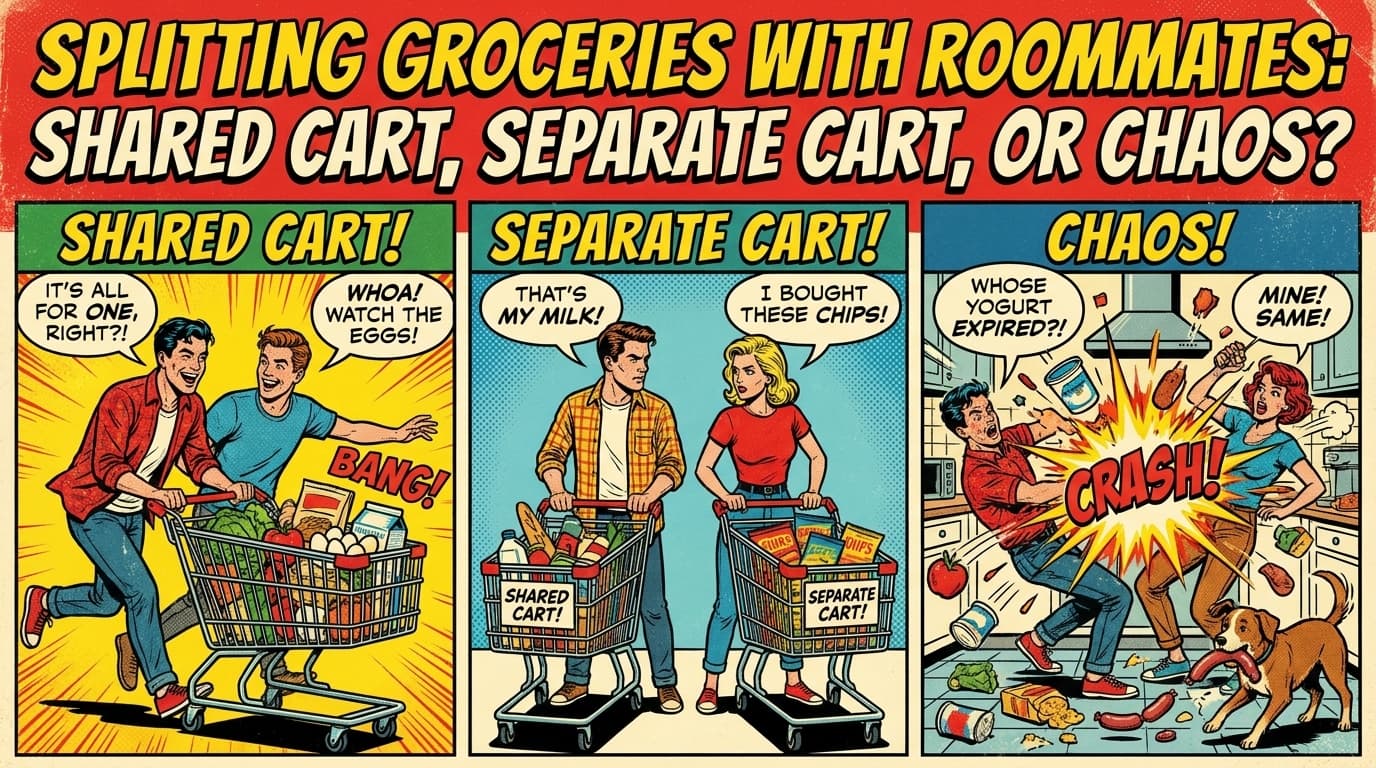
1. Fully separate carts. You buy your food. They buy their food. Label the shelves if you have to.
2. Fully shared. One cart, split 50/50 (or proportionally), you both eat everything.
3. Hybrid: staples shared, personal food separate. Paper towels, olive oil, eggs, milk, rice, the basics that sit in the kitchen forever get split. Your yogurt and their frozen dumplings are yours and theirs.
Most roommates land on option 3 eventually. The ones who don't, usually because they tried option 2 without talking about it first, end up in the strawberry-and-mustard scenario.
When separate works
Fully separate is the right call when:
- You eat wildly different diets (vegan vs meat-heavy, gluten-free vs not, keto vs normal)
- Your schedules never overlap and you rarely cook at the same time
- One of you cooks every night and the other eats out 5 nights a week
- You've tried sharing and it got messy
The upside: zero math, zero tracking, zero resentment. The downside: you end up with two of everything (two olive oils, two boxes of salt, two sets of spices), which costs more in the long run and clutters the kitchen.
The fix for the clutter is a small exception: communal staples. Pantry stuff that's annoying to duplicate (spices, olive oil, flour, salt, pepper, dish soap, paper towels). Just agree those are shared and take turns buying them.
When fully shared works
Rare, but it works when:
- You actually eat similar food
- Your grocery budgets are close
- You cook together at least a few times a week
- Neither of you is secretly annoyed that the other eats "your" leftovers
If you hit all four, go for it. One cart, split 50/50 at checkout, done. Use Supasplit or any shared log to track who paid each trip so it evens out.
The failure mode: one of you eats way more than the other (growing 22-year-old guy vs small-appetite person), and 50/50 starts to quietly sting. Or one of you insists on the $8 sourdough while the other is fine with $3 bread. If that's your dynamic, don't force shared.
When hybrid works (aka: almost always)
Hybrid is the default most roommates should start with. Here's the simple version:
Shared (split 50/50 or by ratio):
- Pantry staples: flour, sugar, salt, pepper, spices, olive oil, vinegar
- Kitchen basics: dish soap, sponges, paper towels, foil, trash bags
- Fridge communal: eggs, milk (if you both drink it), butter
- Cleaning supplies
Personal (each person buys their own):
- Protein (meat, fish, tofu)
- Produce
- Snacks and drinks
- Meal-specific ingredients
- Anything with a strong preference
The key move: one of you keeps a running tab of shared purchases. Each time someone buys household staples, they log it. At month-end, whoever spent less pays the other the difference, or you split the total 50/50 retroactively.
Supasplit makes this one tap, but a shared note works too. The point is not forgetting.
The shared shelf rule
Whatever system you pick, designate shelves.
Top shelf: yours. Middle shelf: theirs. Bottom shelf: shared. Or any variation. Label them if you want, most roommates don't, but the agreement matters even if it's unwritten.
No labels, no lines, no agreement? Everything is "up for grabs" and resentment slowly builds. Even loose structure beats no structure.
The "can I have one?" question
For snacks and one-offs: just ask. "Can I grab one of your yogurts? I'll replace it" is a two-second text that prevents 90% of grocery fights.
The rule is: if it's labeled as theirs or clearly personal, ask. If it's labeled shared, take it, no need to check in each time. Basic stuff. But most roommates skip the ask and then wonder why the other one is passive-aggressive about the kombucha.
What about when one roommate eats way more?
Sometimes the split is structurally uneven: one of you eats three big meals a day, the other lives on coffee and vibes. If you're sharing groceries, 50/50 doesn't work.
Options: go separate (easiest), or shift the shared ratio to 60/40 on household basics. If you're splitting rent proportionally already, use the same ratio on shared groceries. Consistency wins.
Talking about it (without making it awkward)
The conversation is three sentences:
"Hey, can we agree on how we're doing groceries? I'm thinking staples shared, personal food separate. I'll start a running list for the shared stuff if that's cool."
Short, specific, gives them something to react to. Don't open with a complaint about something they bought. Start with the system, not the grievance.
TL;DR
- Hybrid is the default: staples shared, personal food separate. Covers 90% of roommate setups.
- Fully separate is fine if diets or schedules are very different, just share the annoying pantry basics.
- Fully shared only works if your eating habits and budgets actually match.
- Label shelves and track shared purchases. Even loose structure prevents resentment.
- Ask before eating their food. Two-second text, saves a month of weird vibes.
Frequently asked questions
What's the best way to split groceries with a roommate?
A hybrid system works for most pairs: share the pantry staples (flour, oil, spices, dish soap, paper towels) and each buy your own personal food (protein, produce, snacks). Track shared purchases in a running list and settle up monthly.
Should roommates combine grocery shopping?
Only if your diets, budgets, and eating volumes are close. If one of you eats twice as much or has very different preferences, fully combined grocery shopping usually ends with one person feeling shortchanged.
How do you divide grocery costs fairly when roommates eat different amounts?
Go separate on personal food so volume doesn't matter. For shared staples, either split 50/50 (it's small money anyway) or tilt the ratio to match how you split rent, like 60/40.
What should roommates share vs buy separately?
Share: pantry basics (salt, pepper, oil, flour), kitchen supplies (dish soap, paper towels, foil), and true communal items like eggs or milk if you both use them. Separate: protein, produce, snacks, drinks, and anything with strong preference differences.
How do I bring up splitting groceries with a new roommate?
Raise it in the first couple of weeks before bad habits form. Suggest the hybrid system directly: staples shared, personal food separate, shared costs logged. Most roommates will say yes because it's what they were already assuming.