Who Keeps the Couch? Splitting Shared Stuff When You Move Out
When roommates move apart, the couch becomes a problem. Here's how to split shared furniture fairly, from the IKEA basics to the stuff you actually love.

Anna
Supasplit Team
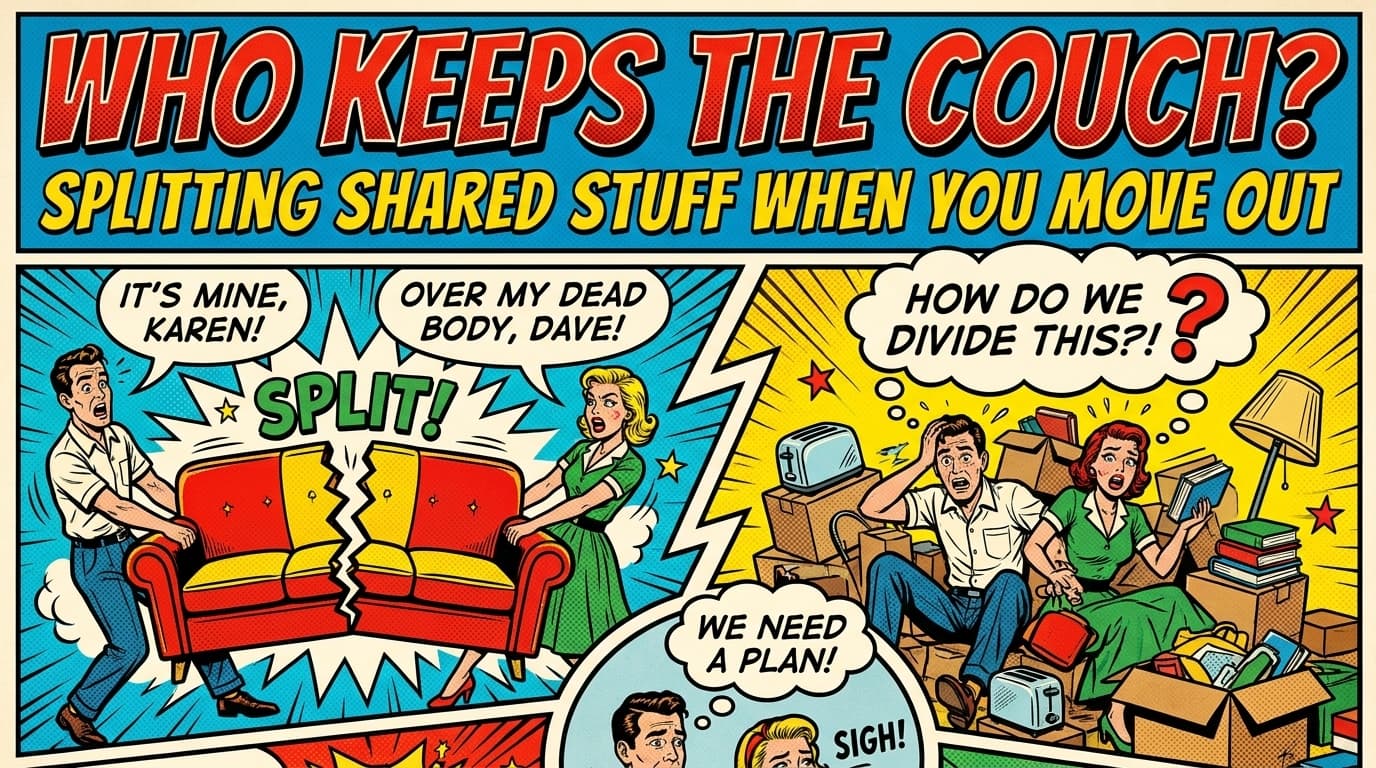
The lease is ending. You're moving to a one-bedroom. Your roommate is moving in with their partner. Both of you kind of want the couch.
You paid for it together, $800 from Article two years ago. Neither of you remembers who researched it. Both of you feel some ownership. Neither of you needs to buy a couch from scratch if you get this one.
So: who keeps the couch?
This is the quietly brutal move-out moment for roommates. The furniture math isn't hard. The emotional math is. Here's how to split shared stuff without burning the friendship over a $200 coffee table.
The first rule: know what's actually shared
Before the move-out conversation, separate the inventory into three piles:
1. Individually owned. Things one person bought entirely. Their desk. Your bed. The art they brought from their last apartment. These go with the original owner, no discussion needed.
2. Jointly owned. Things you bought together, 50/50, for shared use. Couch, coffee table, rugs, kitchen stuff you pooled money for.
3. "Sort of shared." This is the messy middle. One person bought it but the other used it constantly. "Gifted" items that got absorbed into the apartment. Inherited stuff from previous roommates. Things purchased with "I got it this time."
The fights happen in pile 3, almost never in pile 1.
The buyout formula for jointly owned stuff
For anything in pile 2, the fair approach is a buyout at current value, not original cost.
The formula: Person who keeps the item pays the other half of its current fair market value.
Current value, not what you paid. A couch you bought for $800 is maybe worth $400 on Facebook Marketplace two years later. So the keeper pays the leaver $200, not $400.
Why current value:
- Items depreciate. Using original cost overpays the leaver.
- It's the price you'd actually get if you sold it, which is the real alternative.
- It reduces the math fight to "what's this worth now?" which is a Google search.
How to agree on current value
The simple process:
- Check Facebook Marketplace for the same or similar item in your city. Look at sold listings if visible, otherwise active listings.
- Take the median of 3-5 comparable prices. If a used Article couch like yours goes for $350-$450, call it $400.
- Both agree on the number. If one of you thinks the estimate is off, look together.
Don't overthink it. You're not pricing it perfectly, you're landing on a number you both think is fair.
The keeper pays half that to the leaver. Documented, transferred, done.
When neither of you wants it
The reverse problem: you both moving to smaller places, neither of you has room for the couch.
The move: sell it, split the proceeds 50/50 (or by original contribution).
- Post it on Facebook Marketplace a few weeks before move-out.
- Price slightly above what you'd actually accept so you have negotiation room.
- Split the final sale price.
- If it doesn't sell, reduce the price or take the loss. No item is worth lingering in the apartment past move-out day.
One of you should own the "sell the furniture" project. Otherwise nobody does it and it becomes day-of-move chaos.
When both of you want it
This is the hard case. Two options:
Option 1: buyout. One person keeps it, pays the other half of current value. If both of you want it equally, flip a coin or do rock-paper-scissors. Seriously. It's a fair way to resolve a deadlock on a $200 item. Don't let a coin flip wound anyone's ego, it's just a coin flip.
Option 2: sell it and split. Neither of you keeps it, both of you buy new elsewhere. Slight loss on value but avoids the resentment of the other person getting "the good thing."
I've seen pairs pick option 2 specifically because the friendship mattered more than the couch. Never a wrong answer.
The "gifted" and "inherited" items
Sometimes an item appeared in the apartment without a clear transaction. A friend gave you a chair. The previous tenant left a desk. One of you brought something from a parent's house and never reclaimed it.
The rule: original source gets dibs, current utility matters.
Examples:
- Chair gifted to both of you = jointly owned, treat as pile 2.
- Chair gifted specifically to your roommate = theirs, goes with them.
- Desk left by a past tenant = whoever actually uses it more keeps it. If neither really uses it, sell or donate.
- Something from your parents = yours, goes with you.
When in doubt, ask: who brought it in, and who's using it now?
The mini inventory
Here's a rough framework for common shared stuff and how it usually lands:
Usually individually owned:
- Beds, mattresses
- Desks, office chairs
- Personal art
- Electronics (TV, speakers, gaming stuff, unless explicitly pooled)
Usually jointly owned:
- Living room couch
- Coffee table, side tables
- Rugs
- Kitchen stuff bought together (pots, pans, nicer utensils, dining table)
- Shared decor
Often messy:
- Appliances (coffee maker, air fryer)
- Cleaning supplies (rarely worth splitting at move-out, just let someone take them)
- Plants (give them a good home, please)
- Half-used pantry stuff (donate or take individually)
For the messy-middle items that are low-cost, skip the buyout math. Whoever wants it more takes it. Saves the energy for the stuff that actually matters.
The "just take it" move
Sometimes the cleanest answer is: the leaver takes less than their fair share. Or the keeper gives more than they owe. A little generosity at move-out oils the hinges of a long friendship.
You're not going to remember the extra $50 you spent on the buyout in five years. You will remember whether your roommate was a jerk about the coffee table. Small investment, big return.
Obviously this goes both ways. If one of you is offering generosity, don't take advantage of it. Match the energy.
Writing it down
Before moving day, both of you should have a list of what's going where, with agreed buyouts for anything shared. Email it to yourselves so it's timestamped. Nothing fancy.
Example:
Couch: A keeps, pays B $200 (half of $400 current value). Paid via Venmo 2026-05-03. Coffee table: sold on Marketplace for $80, split 50/50, each gets $40. Rug: B keeps, A takes the IKEA lamp in exchange, agreed equal value. Kitchen table: donate.
That's it. 10 minutes of writing that prevents a year of "wait, did we settle the rug thing?"
TL;DR
- Separate the inventory into individually owned, jointly owned, and sort-of-shared. Most fights happen in the third pile.
- Buyouts go at current market value, not original price. Check Facebook Marketplace, agree on a number, pay half.
- When both want it, buy each other out or sell and split. A coin flip is a fine tiebreaker.
- Handle it 3-4 weeks before move-out, not during. The last week is the worst time for any negotiation.
- Write it down, email the list. Dumb simple documentation prevents future "wait, we never figured that out."
Frequently asked questions
How do roommates split shared furniture when they move out?
For items bought together, one person keeps it and pays the other half of current fair market value (not original price). Check Facebook Marketplace for comparable prices, agree on a number, transfer the money. For items neither wants, sell and split the proceeds.
Should I use original price or current value for a furniture buyout?
Current value, based on what it'd actually sell for now on Facebook Marketplace or similar. Items depreciate, and original cost overpays the leaver. The real alternative is selling it, so price at what the market would pay.
What happens to shared furniture if both roommates want to keep it?
Two options: one buys the other out at half current value, or you sell it and each buy new. A coin flip or rock-paper-scissors is a perfectly fair tiebreaker for a deadlocked item, don't overthink it.
How do I handle furniture one person bought but we both used?
Goes with the original owner. Usage doesn't create ownership, paying for something does. If you used their couch for two years, that's fine, but it's still their couch when you move out. Same logic as borrowing anything else.
When should we have the furniture conversation before moving out?
Three to four weeks before move-out, minimum. Move-out week is the worst possible time to negotiate buyouts because everyone's stressed and there's no time to actually sell stuff. Early conversation, late regrets, is the pattern to avoid.