Who Pays for the Driver's Gas? A Road Trip Rulebook
Gas, tolls, the driver's wear-and-tear, and who covers the Red Bull. The honest rulebook for splitting a road trip without screwing the person behind the wheel.

Anna
Supasplit Team
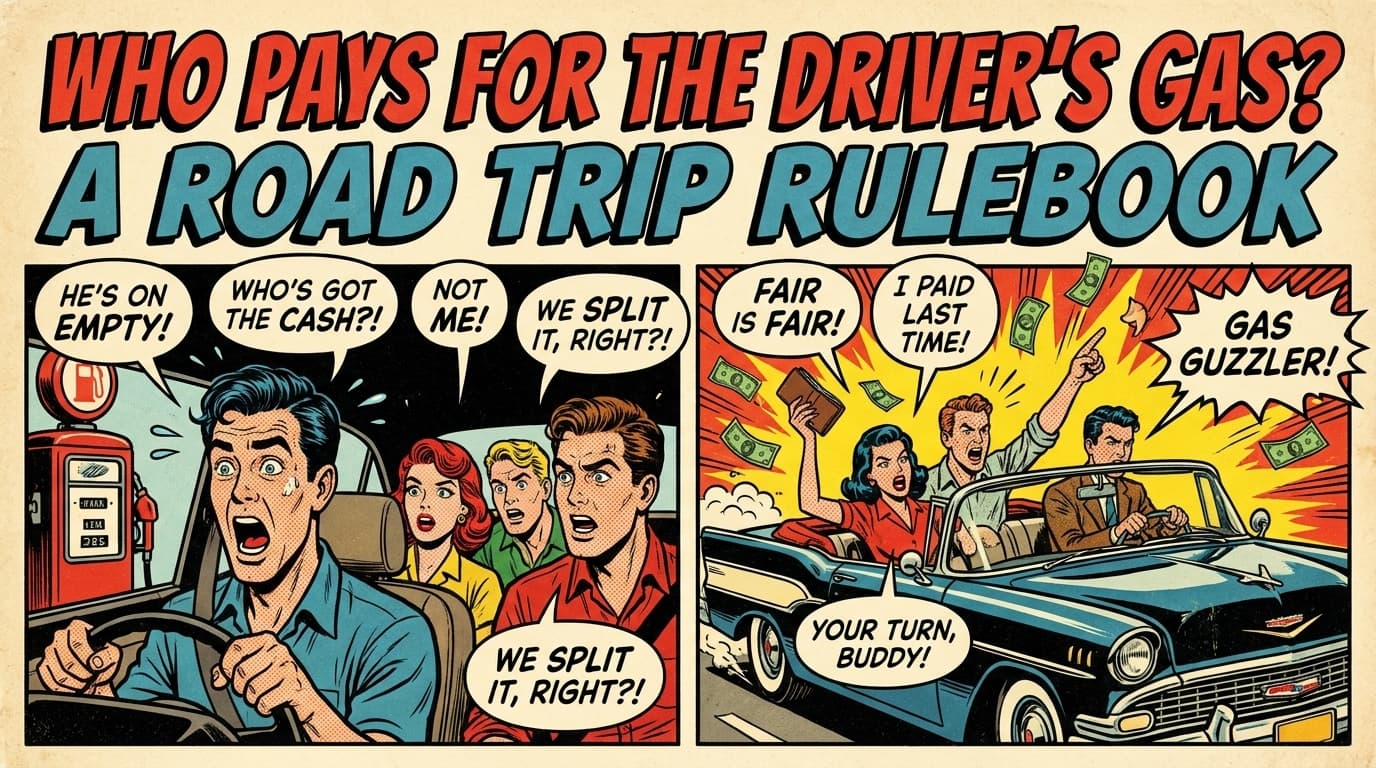
Four of you are driving from Denver to Moab. One car, 14 hours round trip, roughly $220 in gas, three tanks of fuel, two gas-station snack stops, and one toll road nobody saw coming. Whose card taps at the pump?
Road trips get weird about money because the driver is doing more than paying. They're using their car, their miles, their tires. Here's the rulebook.
The baseline split: everyone pays for gas, the driver doesn't
The accepted norm in most friend groups is that the driver provides the car and the passengers cover gas. The driver gets their fuel fully paid for. If there are four people total (driver plus three passengers), passengers split the gas three ways. Driver pays zero.
Why this works:
- Driver is already eating the wear-and-tear, miles, and car risk
- Gas feels like 'shared transportation' cost, everyone benefits equally
- It's the cleanest possible rule
If there are multiple drivers on the trip (you and your friend both drove your own cars), the math changes. We'll get to that.
But what about wear and tear?
The IRS mileage rate for 2026 is around 67 cents per mile. For a 14-hour round trip, that's easily $400-500 in 'true' cost including gas, depreciation, and maintenance. Technically, if you wanted to be fair-fair, passengers would pay more than just gas.
Here's the honest answer: most friends don't do this, and it's usually fine. The driver is volunteering to drive, and a long-term friendship involves uneven favors that even out. If the same person is always driving and never gets a gas-paid vacation themselves, that's a different conversation.
Where wear-and-tear compensation DOES come up:
- Driving someone's car a really long distance (cross-country, not a weekend)
- Driving a new car someone just bought
- Driving in rough conditions (mountain passes in winter, off-road stretches)
In those cases, a 'thank you' amount above just gas is reasonable. Think $50-100 on top, not a formal per-mile calculation.
Tolls, parking, and 'the driver's coffee'
- Tolls: split among everyone, including the driver. Everyone's using the road.
- Parking: same, split among everyone.
- Driver's coffee/energy drink: passengers cover this. It's a gas-station goodwill move. The driver's not paying for the thing keeping them awake to drive you.
- Snacks: everyone buys their own unless you're specifically sharing (a bag of pretzels on the dashboard, a case of LaCroix for the car). Shared stuff, split equally.
How to actually pay for gas
Three working methods:
Method 1: Someone fronts, Venmo at the end. Driver pays at the pump every time, passengers total up and reimburse at the destination. Easy but requires trust.
Method 2: Rotate who taps. First stop, passenger A pays. Second stop, passenger B. Third, passenger C. It evens out roughly, but works best on long trips with multiple fills.
Method 3: Log in an app, settle later. Driver logs each fill, app divides among the passengers. No one has to do mental math in a gas station parking lot.
Method 3 is my favorite. It also handles the weird stuff (the toll road, the parking fee) in the same ledger.
Multi-car road trips
Two cars, going the same places. This is where gas splits get spicy.
Option A: Each car handles its own gas. Driver A gets paid by their passengers, driver B gets paid by theirs. Clean, but unfair if the cars have very different fuel economy.
Option B: Pool all gas across both cars. Total gas, split among all passengers, drivers don't pay. Fair if the fuel economies are comparable.
Option C: Normalize to 'per passenger-mile.' Get complicated, skip unless your trip is two weeks cross-country.
For weekend trips, Option A is almost always fine.
Renting a car as a group
Renting changes the math. Now nobody 'owns' the car, so everyone is sharing cost equally.
- Rental fee + insurance: split equally among all people in the car, including the person who booked it.
- Gas: split equally.
- Driver surcharges (under-25 fees, additional driver fees): paid by the person those fees apply to, not split.
- Fines, tickets, damage: the person at the wheel when it happened pays, unless the group agrees otherwise.
The long-distance special case
Driving cross-country? The 'passengers pay gas' rule still works, but because the amounts are larger, bring up wear-and-tear openly. A common middle ground: passengers cover gas AND all of the driver's meals and lodging stops along the route. The driver's 'trip cost' essentially goes to zero. Then wear-and-tear is their contribution to the friendship.
The EV wrinkle
Electric vehicles change the math a little. There's no 'gas,' but there IS charging cost, which is real and varies a lot by how you charge:
- Home charging: effectively pennies per mile. Easy to hand-wave away, but a 14-hour round trip is still real electricity. A rough $5-15 is fair.
- Public DC fast chargers: similar to gas in cost, sometimes more. $30-50 per charge stop is normal on a long trip.
- Tesla Superchargers: visible in-app pricing, log each session like a gas fill.
Treat charging the same as gas. Passengers cover it, driver doesn't. The 'I charged at home' discount is fine to absorb into the driver's goodwill column.
When someone drives and no one even thinks about gas
This is the most common bad pattern. The driver pays out of pocket, everyone says 'I'll get you later,' and no one ever does.
Fix: log the gas receipt in a shared app at the pump. Three seconds. Now the number exists, and the passengers can Venmo that amount without math. Most of the time, people want to pay, they just forget.
TL;DR
- Passengers cover the driver's gas. Split it among passengers only. Driver pays zero for fuel.
- Tolls and parking are split across everyone, driver included. Everyone uses those.
- Passengers buy the driver's coffee. Small cost, huge goodwill.
- Log gas receipts at the pump in a split app. Driver gets reimbursed without chasing anyone.
- Rental cars are split equally (rental fee, gas, tolls). Age surcharges and tickets stay with the person they apply to.
Frequently asked questions
Should the driver pay for gas on a road trip?
No. The standard rule among friends is that the driver provides the car and passengers cover the gas, split among the passengers only. The driver is already eating the wear-and-tear, mileage, and car risk, which roughly offsets their share of the fuel cost.
How do you split gas on a group road trip?
Total the gas cost for the trip and divide among the passengers, not including the driver. If there are multiple cars, each car usually handles its own gas separately. Log fills as they happen in a split app so nobody has to reconstruct receipts later.
Should passengers compensate the driver for wear and tear?
On short trips, covering the gas is usually enough and friendships even out over time. On long trips (cross-country, multi-day), a small thank-you above gas is reasonable. The cleanest version is passengers covering the driver's meals or lodging along the route.
How should tolls and parking be split on a road trip?
Split equally among everyone in the car, driver included. Unlike gas, tolls and parking are direct shared-road costs that benefit all passengers equally, so the driver's contribution matches the passengers'.
What if we're renting a car for the trip?
Split everything equally: rental fee, insurance, gas, tolls. Age surcharges (under-25 fees) stay with the person they apply to, and any tickets or damage charges go to whoever was driving when it happened, unless the group agrees to share.