US Tipping in 2026: How Much, When, and for What
Tipping in the US has gotten weird. Here's the current guide to how much, when to tip, when not to, and what to do when the iPad flips around and judges you.

Anna
Supasplit Team
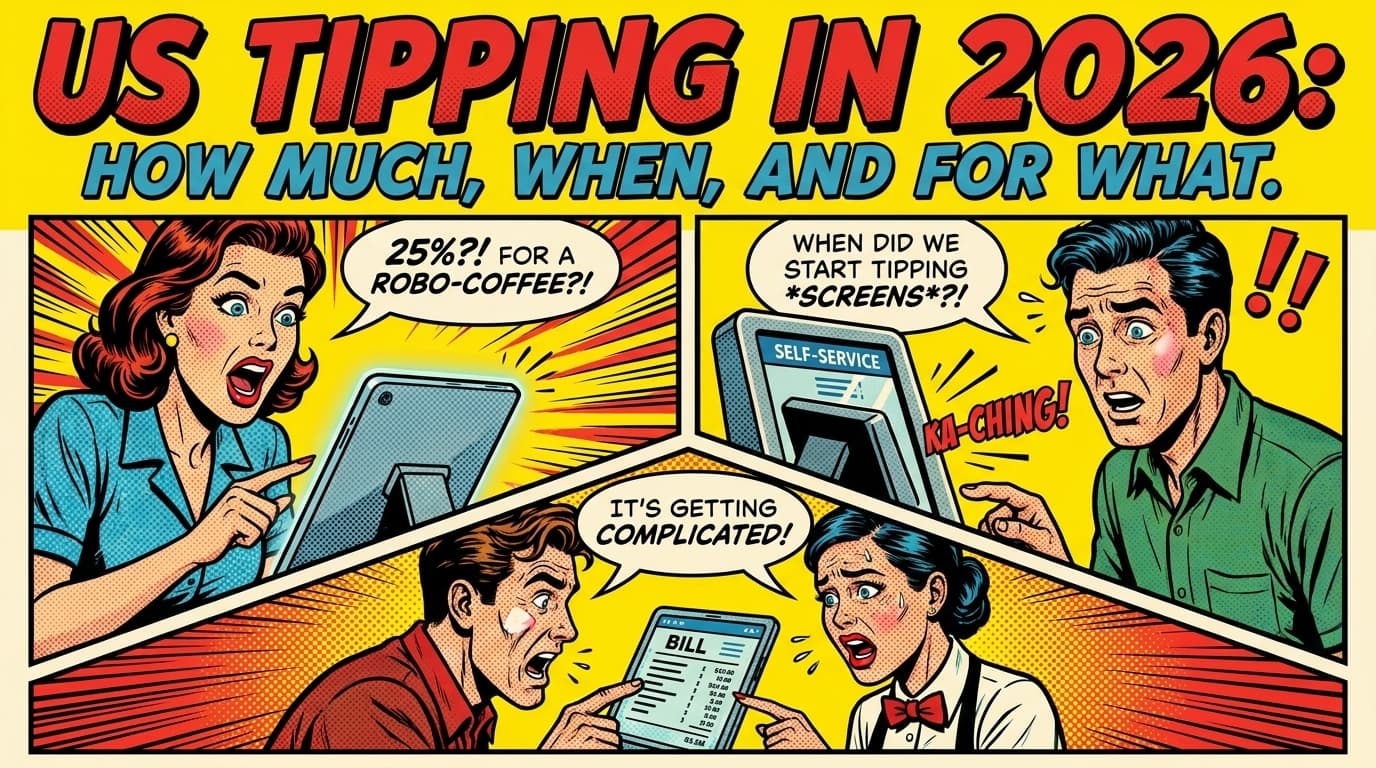
Tipping culture in the US has been doing a lot lately. What was a clear "15-20% at restaurants" has become "the self-checkout kiosk at the airport is asking for 22%."
Here's the practical, current guide: what's expected, what's optional, and what to do when the iPad flips around and three buttons stare at you.
Restaurants (sit-down)
Standard: 18-20%.
Exceptional service: 22-25%.
Genuinely bad service: 15% and say something to the manager. Tipping zero is rarely the right move because servers often tip-out bar and support staff from their total sales, so stiffing hurts people who weren't involved in bad service.
Tipping on the pre-tax or post-tax amount is technically a choice. Most people tip on post-tax because that's what's in front of them on the bill. The dollar difference is small.
Bars
Single drink ordered at the bar: $1-2 per drink, or 15-20% if you ran a tab.
Complicated cocktails or bottle service: 20% on the tab.
Beer or wine, no fuss: $1 is fine.
Takeout
Contentious. The cultural answer right now:
- You picked up the order yourself at a place with no table service: 0-10% is fine. 0% is not rude.
- The place is a sit-down restaurant where you ordered takeout: 10-15% because the same staff packed your food.
- Coffee shops, bakeries, counter service: 0-10%, higher if they're doing real work (latte art, custom drink, etc.).
Delivery
Food delivery (DoorDash, Uber Eats, etc.): 15-20% of the order total, minimum $3-5 for small orders.
Delivery in bad weather or long distance: bump it up. The app's default is usually stingy.
Ride services (Uber, Lyft, taxis)
Uber/Lyft: 15-20% is standard now. The apps prompt you. $2-5 per ride is a common flat-rate baseline.
Taxis: 15-20%, round up.
Airport rides or heavy luggage: add a few dollars for bag handling.
The "iPad flip" tip moment
The self-service situation: you pay for a $6 coffee and the screen asks 20%, 25%, 30%.
The honest answer: you don't owe 20% on a counter-service coffee. The iPad is asking for cultural reasons, not economic ones.
Counter service where someone poured / prepped your food: $1 or 10% is fine. Higher if you're a regular or it's genuinely custom.
Self-service kiosk where you ordered yourself and walked to the counter to get your stuff: 0% is reasonable. The screen is guilt-tripping you.
Actual service you received (bartender made your cocktail, stylist did your hair, massage therapist actually did their job): yes, normal tipping rules apply.
Services (haircut, nails, massage, spa)
Haircut / color: 15-20%.
Nails: 15-20%, higher for long sessions.
Massage: 18-20%.
Spa services: 18-20%.
If you're a regular, tip higher on your regular visits (they save your appointments, remember your preferences, text you when they have openings). That goodwill comes back.
Delivery services (movers, grocery delivery, furniture)
Furniture delivery: $5-20 per mover depending on how hard the job was (stairs, heavy pieces).
Movers: 5-10% of the total bill per mover, in cash, handed to them at the end. Or a flat $20-40 per mover for a half-day, $40-60 for a full day.
Grocery delivery: 15-20% of the order, tipped in-app.
Hotels
Housekeeping: $2-5 per night, left daily (not all at the end, because the person who cleans on different days may not be the same person).
Bellhop: $1-2 per bag.
Valet: $2-5 when they bring your car back.
Concierge: $5-20 if they did real work for you (booked a reservation, got hard-to-get tickets).
When tipping genuinely isn't expected
- Fast food. Nobody expects a tip at McDonald's.
- Retail. Your barista tip is cultural. Your Best Buy cashier tip is not a thing.
- Professional services with flat fees (doctors, lawyers, CPAs).
- Government workers (DMV, USPS).
- Airline staff.
When traveling abroad
The US is an outlier. Tipping expectations in most of Europe are 5-10% rounded, if anything. Japan considers tipping weird. Australia doesn't really tip. Check the country before you assume.
The group-dinner tipping trick
When splitting a bill with friends, itemize on the subtotal and split tax and tip proportionally. Don't let one person pay with their credit card, add 20% tip on the full amount, and then ask everyone else to Venmo a flat share, that's a quiet way to leave them eating tax and tip on someone else's steak.
A receipt-scanning app handles this automatically. Or do the math: each person's share of tax + tip = (their subtotal / total subtotal) × total tax + tip.
TL;DR
- Restaurants (sit-down): 18-20%. 22-25% for great service.
- Bars: $1-2 per drink, or 20% on tabs.
- Takeout: 0-10%. 0% is not rude for counter pickup.
- iPad-flip moments: no, you don't owe 25% on a $6 coffee. $1 or nothing is fine.
- Services (haircut, massage, spa): 15-20%. Cash for movers.
- Group dinners: split tax and tip proportionally, not as a flat per-head share.
Frequently asked questions
How much should you tip at US restaurants in 2026?
18-20% for standard service at sit-down restaurants. Bump to 22-25% for exceptional service. Tip on the post-tax or pre-tax amount, either is defensible, the dollar difference is small.
Do you have to tip for takeout?
Not really. 0-10% is fine for counter pickup where you didn't receive table service. Tip closer to 10-15% if it's a sit-down restaurant where the same staff packed your order.
Is it rude to hit 'no tip' on the iPad screen at a coffee shop?
Not for a self-service counter order where nobody did meaningful work for you. The three-button guilt-trip is a cultural pressure tactic, not an economic expectation. $1 or nothing is both reasonable.
How much do you tip Uber and Lyft drivers?
15-20% of the fare, or $2-5 per ride as a flat baseline. Bump higher for airport rides with luggage, long distances, or bad weather.
How do you split the tip when splitting a restaurant bill with friends?
Proportionally. Each person's share of the tip equals their share of the subtotal. Don't flat-split the total check because it makes the light eaters subsidize the heavy spenders' tax and tip.