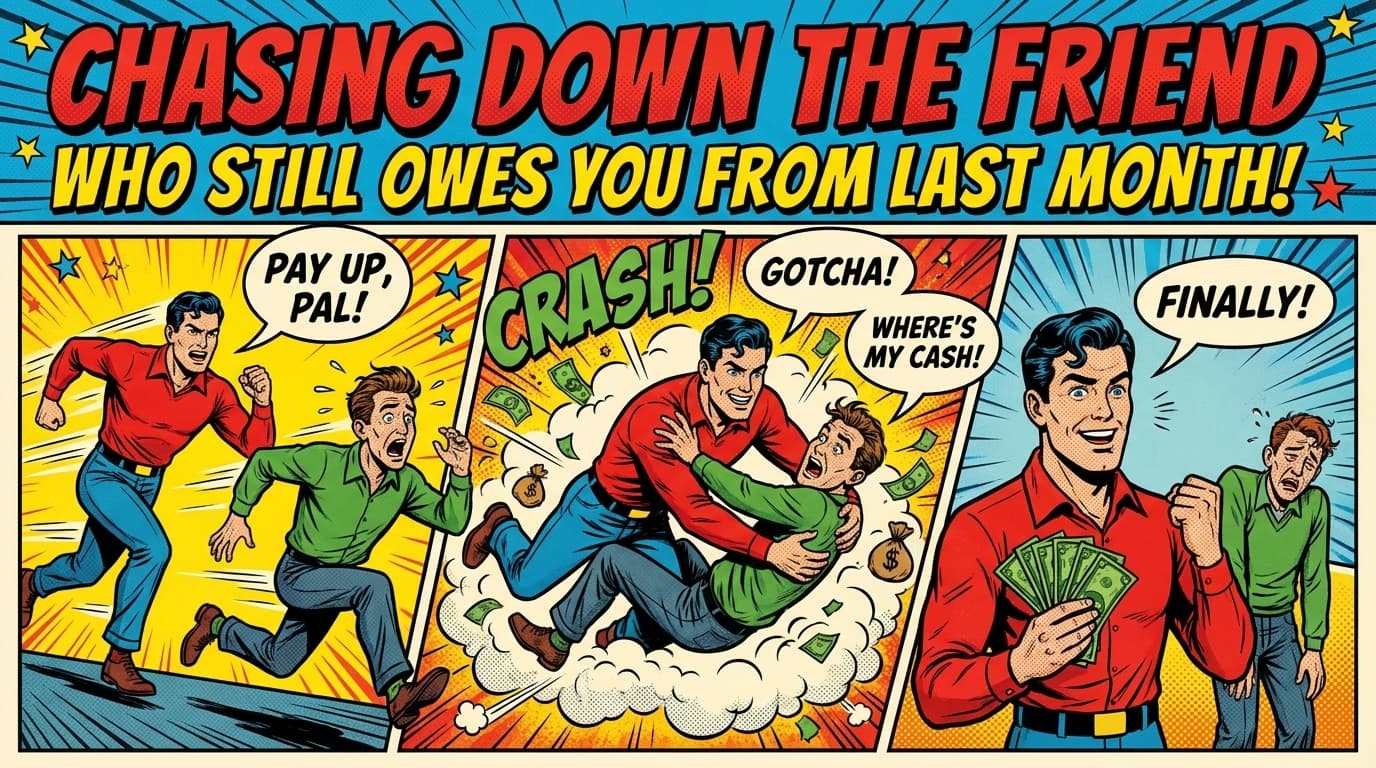
Chasing Down the Friend Who Still Owes You From Last Month
A friend still hasn't paid you back for last month's dinner. Here's how to bring it up without being weird, and when to just let it go.

Anna
Supasplit Team
The slow burn of a friend who said "I'll get you"
It's been three weeks. You covered dinner. They said "I'll Venmo you." Your phone has been silent about it ever since.
Every time you see them post a story at a concert or a new restaurant, a small part of your brain goes they still owe me $48. You try to ignore it. You tell yourself it's fine. You're not that person.
But also, it's $48. And they clearly have $48, because they're at the concert.
This is one of the most common money-related friendship strains, and it almost always comes from one mistake: you let too much time pass without saying anything. The longer you wait, the weirder the conversation feels, so you wait more, so it feels weirder. Here's how to break the loop without making it a whole thing.
Why this gets so awkward so fast
The core mismatch: you think they remember, they forgot.
Most of the time, friends who "still owe you" are not pocketing your money on purpose. They got home that night, opened TikTok, and the mental note evaporated. They have no idea it's still outstanding. In their head, it was handled.
So when you bring it up three weeks later, the awkwardness isn't because they're caught. It's because there's this gap between how much brain-space you've given it (a lot) and how much they've given it (zero).
Your goal is to close that gap fast, without making them feel like they were tracked.
The 24-hour rule is real
The single best fix for "friend owes me money" is never letting this problem form in the first place. Within 24 hours of any shared expense, either:
- Send a Venmo request with a clear memo
- Send a chat message with the amount: "hey you're $48 on the dinner, whenever"
- Log it in a split app so there's a record
Twenty-four-hour requests are universally fine. Three-week requests feel weirder because time compounds awkwardness. Do the thing early and you avoid 90% of the problem.
The message that actually works, weeks later
For when you didn't get it out early and now it's been a while. The template:
"Hey, totally forgot to follow up, you're at $48 for the dinner at Rosa's, want me to send a Venmo request or do you want to just send it?"
Why this works:
- "Totally forgot to follow up" reframes the delay as your oversight, not theirs. Removes the gotcha feeling.
- Specific amount and specific context ("Rosa's") makes it concrete, not a vague debt accusation.
- Two options to pay gives them a way to take action immediately. Don't leave it open-ended.
- Casual tone keeps it out of confrontation territory.
Almost every friend receives this message, smacks their forehead, and sends the money within an hour.
What to do if they don't respond
Sometimes the message sits there. Three options:
One gentle nudge (4-5 days later):
"No rush, just wanted to make sure my last one didn't get lost. $48 from dinner."
Short. Not accusing. Acknowledges the message may have been missed in the scroll.
A Venmo request (a week after the second message):
Send it with a clean memo: "Rosa's dinner 3/14." Don't editorialize. No emojis that read as passive-aggressive. Just the facts.
A direct ask:
If the request still sits unanswered, one last plain message:
"Hey, is now an okay time to settle the dinner? If you need to wait, no worries, just want to get on the same page."
This one surfaces whether there's a reason (they're broke this week, they're going through something, they forgot their Venmo password, whatever). It gives them a dignified out. It also stops the silent-guessing game.
When to just eat the loss
Not every owed amount is worth chasing. If any of these apply, consider letting it go:
- Under $20 and it's been 3+ months. The relationship cost of the conversation is higher than the money.
- The friendship is already drifting. You haven't talked in months anyway. Chasing $30 won't fix that.
- You notice you've been the one covering a lot. This one isn't a loss issue, it's a pattern. The fix isn't a Venmo request, it's a bigger conversation (or a decision to stop covering).
- They're genuinely struggling. Sometimes friends go through money problems they don't advertise. If you have the resources to absorb a small loss and they don't have the resources to pay, that's a gift you can give.
If you decide to let it go, actually let it go. Don't keep quietly tallying it. The resentful mental-ledger is worse than the $30.
The pattern test
One-off slow pays happen to everyone. Pattern slow pays are a signal.
Rough test: if you can think of three separate amounts from three separate events this year that they never paid back, you have a pattern friend, not a forgetful friend.
With pattern friends, the fix is upstream, not downstream. Stop fronting their share. When the bill comes, suggest splitting at the table so their card goes in too. At group events, have them pay the organizer directly, not you. You're not punishing them, you're just removing yourself as the de facto banker.
This is easier than repeatedly asking to be paid back.
The "just log it somewhere" principle
A lot of this stress comes from tracking owed money in your head or in your texts, where it gets buried.
The move: log every shared expense the moment it happens, in one place. A split app works. A shared note works. A running list works. The tool matters less than the habit.
When everything's logged, you can look at the list once a month, send a polite batch message for anything over 30 days old, and move on. No mental ledger. No rumination. No staring at their Instagram story while doing silent math.
TL;DR
- 24-hour requests are the cure. Ask within a day and this problem almost never happens.
- For older amounts, lead with "I forgot to follow up", name the exact amount, and offer two ways to pay.
- Nudge once, request once, then ask directly. Don't loop silently for weeks.
- Eat small amounts from drifting friendships. The conversation cost is higher than the money.
- Three unpaid amounts in a year = pattern, not forgetfulness. Fix upstream by not fronting their share.
Frequently asked questions
How do I ask a friend who owes me money without being awkward?
Lead with 'hey, totally forgot to follow up' to frame the delay as your oversight, then name the exact amount and the exact meal or event. Offer two ways to pay, a Venmo request or them sending it directly. Most friends respond within the hour because they actually forgot, not because they were holding out.
How long should I wait before asking a friend to pay me back?
Within 24 hours is the best move, either as a Venmo request or a casual message with the amount. If you missed that window, aim to follow up within a week. Past three weeks it's still totally fair to ask, but lead with the 'I forgot to follow up' framing so it doesn't feel like a month-long grudge.
What do I say if my friend ignores my Venmo request?
Wait 4-5 days, then send one gentle nudge: 'No rush, just wanted to make sure my last one didn't get lost.' If that doesn't move it, send a direct message asking if now is an okay time to settle. Don't repeat-request aggressively, it doesn't work and it ends friendships.
When should I just let an unpaid debt go?
Let it go if the amount is small, the time gap is long, and the friendship is already drifting. Also let it go if you know the friend is genuinely struggling financially. But actually let it go, don't keep quietly tallying it in your head, because the resentment is worse than the money.
What if the same friend always forgets to pay me back?
That's a pattern, not forgetfulness. Stop fronting their share. At the table, suggest splitting the bill at the restaurant so their card goes in. At group events, have them pay the organizer directly. You're not punishing them, you're just removing yourself as their default banker.